Hey guys, if you’re part of a community center board, facility manager, or just someone who’s ever had a Saturday night potluck or a youth basketball tournament derailed by a random power outage, you’ve probably asked this: “Can we actually use an emergency generator here?” Short answer? Hell yeah—wait, no, make that a much better, more practical answer that actually makes sense for a community space, not just a single family home. Let me break this down because, full disclosure, I work in the emergency generator game, so I’ve sat through way too many community board meetings where people argue about “costs” vs “what happens if we lose power for 12 hours during the senior holiday lunch.” No one wants to be the person who has to explain why the center’s only working fridge of vaccine shots or the heat for the after-school program died because they skipped getting a gen set.
First, let’s get one thing straight: community centers aren’t regular houses. They’re big. They’ve got multiple spaces—maybe a main hall with a sound system, a kitchen, a few office rooms, a daycare nook, and a heating or AC unit that runs a lot more than your average home. If you just grab a tiny portable generator from Home Depot, you’re gonna blow a circuit faster than a kid ruins a craft project. That’s why picking the right size (and type) is non-negotiable here.
Let’s talk about who uses community centers, because that’s what makes the power need different. You’ve got elderly folks who can’t handle cold or heat—if the winter heat cuts out mid-day, you’re not just uncomfortable, you’re dealing with vulnerable people. Then there’s the after-school program with computers for homework—no power means no laptops, no lights, no way to keep track of kids safely. Oh, and those annual events: the food drive where you need freezers for donations, the town meeting where you need microphones so 100 people can hear, the emergency shelter setup if the power outage is part of a bigger storm (we’ve all seen those hurricane clips where community centers turn into shelters at 2 a.m.). A generator that can power only your own TV? That’s useless here.
So now, can you actually operate one in a community center? Let’s cover the practical stuff first—rules, installation, noise, maintenance. You can’t just plop a generator in the middle of the gym floor and call it a day. Most municipalities have codes for standby generators, especially for commercial or community spaces (community centers are usually considered “light commercial” for these rules). That means things like: it has to be placed at least a few feet from doors or windows so exhaust fumes don’t seep inside (carbon monoxide is no joke—deadly, and you absolutely do not want that around a bunch of kids). It needs a proper transfer switch, not just extension cords plugged into the wall. If you use extension cords, you’re bypassing the whole generator setup and creating a fire hazard or backfeeding the grid, which can hurt line workers fixing the power. That transfer switch is the key—when the grid dies, you flip it, and the gen set takes over only the circuits you’ve pre-planned, not the whole building (which would be a total waste of fuel).
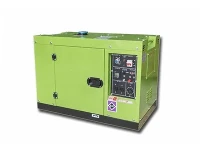
Noise is another big one. Community centers are in neighborhoods, right? You don’t want to run a generator that’s loud enough to annoy the folks living next door during a weeknight meeting. Some diesel gens are pretty quiet these days, especially the newer models, so you won’t get a 2 a.m. noise complaint when the power goes out at night during a storm. That’s why a lot of our clients go for options like the Honda 10kVA Diesel Generator, which is designed for semi-quiet operation and has enough juice for most small to mid-sized community centers. Wait, let’s do the math: 10kVA is about 8 kilowatts, which is enough for a kitchen fridge, overhead lights, a sound system, and a small heating unit. If your center is bigger—say, 10,000 square feet, with a full commercial kitchen and a daycare AC—you’d step up to a higher kVA. Diesel is usually the way to go for community centers too, because gas generators need refueling every few hours if they’re running long, and diesel stores way better (no bad gas sitting in a tank for months between outages, which is a huge relief for people who aren’t handy with generator maintenance).
Wait, let’s address the elephant in the room: cost. I know, community centers have tight budgets. No one wants to drop $10k on a gen set if they only use it twice a year. But here’s the thing: the alternative is way more expensive. If you lose power and the center’s food freezers defrost, that’s hundreds (or thousands) of dollars in spoiled food for the food bank. If you can’t run lights during the Christmas bazaar because the power is out, you lose vendor fees that the center relies on. And if the power outage is part of a major emergency—like a storm that knocks out power for 3 days—you’re suddenly a shelter for 50 people, and a generator that can’t power a few space heaters and a water pump is basically useless. There are ways to work with budget, too. A lot of our clients start with a mid-sized unit like the Diesel Whole House Generator, wait—hold up, that’s not just for houses. A 10kVA whole-house diesel genset has the flexibility to power a small community space because it’s sized to handle consistent loads, unlike a regular portable. Or if you need even more flexible sizing, our 8kVA Diesel Generator For Sale is perfect for smaller community centers that just need to power the main hall, office, and kitchen—not the whole building.
Installation and maintenance are two other things that people stress about, but they don’t have to be. You don’t have to hire a separate company to fix your generator every time it has a hiccup. Most standby gens come with annual maintenance plans that check oil, filters, fuel levels, and test it monthly (super important—you can’t just set it and forget it; if it’s been sitting for a year and the carburetor is gummed up, it won’t start when you need it). For community centers, the monthly test is easy—someone just flips the switch for 10 minutes, makes sure it’s running, and that’s it. Transfer switch installation can be done by a licensed electrician, which is required by code, so that’s not a DIY project, but it’s a one-time cost that pays off big time.
Wait, let’s talk about real-life examples because this isn’t just theory. Last year, I worked with a community center in Ohio that had their generator fail during a winter ice storm that knocked out power for 4 days. Their old portable gen couldn’t power the senior room’s heaters, so they had to bus 30 elders to a church 20 minutes away, which was a logistical nightmare and totally unnecessary. They upgraded to a Honda 10kVA Diesel Generator, and this past winter, when another ice storm hit, they flipped the switch at 1 a.m., had heat for the seniors, lights for the after-school kids, and kept the food bank’s freezers running the whole time. No emergency bus, no angry calls from elders, no lost food. That’s the kind of win you get when you pick the right gen for the job.
Another client: a small community center in Chicago that hosts weekend youth programs and a weekly community meal. They were on a super tight budget, so they went for our Generator 7.5kVA Single Phase Price—small enough to fit in their small utility closet, quiet enough that their neighbors didn’t complain, and enough power for the meal prep, lights, and the small computer lab. They only use it a few times a year, but last summer, during a heatwave that knocked out power for 8 hours, it kept the AC running for the daycare kids, which was a huge relief for the parents who had nowhere else to take their little ones.
Now, let’s clear up some common myths people have about emergency generators for community centers. Myth 1: “Diesel is too expensive to run.” Sure, if you run a 100kw Diesel Generator for 24 hours straight, it’ll use more fuel than a smaller one, but let’s be real—how often does your community center need to run a full-sized 100kw unit? Probably only during major storms, and even then, you can prioritize circuits. Most of the time, a 10kVA or 8kVA unit is more than enough, and diesel is actually more fuel-efficient for consistent runs than gas, so it saves you money in the long run. Myth 2: “Generators are hard to operate.” No, modern standby gens are automatic—when the grid detects a power outage, it fires up on its own, switches over, and turns off when power comes back. You just have to do the monthly test and the annual maintenance, which takes like an hour max. Myth 3: “It’s too loud for a community area.” Like I mentioned earlier, newer diesel models are way quieter than old ones. The Honda 10kVA, for example, has a noise level around 65 decibels—about as loud as a normal conversation, so it won’t disrupt events or annoy neighbors.
Wait, also, let’s think about different community center types. A big one that has a gymnasium, full kitchen, and multiple offices will need a bigger unit, maybe the 100kw Diesel Generator, because it can handle higher loads. A small town hall community center that only has a main meeting room and a tiny kitchen can get away with a smaller 7.5kVA or 8kVA unit. The key is mapping out exactly what you need to power before you buy, which is something we help our clients with—we do free load assessments, so you don’t overspend on a unit that’s too big or underbuy on one that’s too small.
Now, let’s get to the big question: is it worth it? Absolutely. Community centers are the backbone of small towns and neighborhoods—they’re where people gather, where vulnerable folks get help, where events happen that bind a community together. A power outage shouldn’t derail that. Having an emergency generator isn’t just a “nice-to-have” anymore, especially with how extreme weather has gotten lately (we’re seeing way more storms that knock out power for days, not hours). It’s an investment in the community’s safety, connectivity, and well-being.


If you’re on the fence, here’s my advice: don’t wait for the next outage to happen. Do a quick audit of your space—write down all the things you need to power during an outage: fridge/freezer, heat/AC, lights, sound system, computers, any medical equipment (like a fridge for medications, if you have it). Then reach out to a reputable generator provider (that’s us, by the way) to walk through your options. We can help you pick the right size, type, and make sure you comply with local codes, and even set up maintenance plans so you never have to worry about your generator failing when you need it most. Don’t be the community board that has to apologize to 50 people because their center was useless during a storm. Be the one that steps up and keeps your community safe and connected, no matter what the power grid throws at you.
References:
- National Fire Protection Association. (2021). Standard for the Installation of Stationary Engines and Gas Turbine Systems (NFPA 37). Quincy, MA: Author.
- U.S. Environmental Protection Agency. (2022). Emergency Generator Safety Guidelines for Commercial and Community Facilities. Washington, DC: Author.
- International Code Council. (2020). International Building Code (Chapter 10: Means of Egress, Chapter 12: Interior Environment). Country Club Hills, IL: Author.
- Center for Disease Control and Prevention. (2023). Emergency Preparedness for Community Facilities: Power Outage Planning. Atlanta, GA: Author.