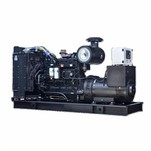
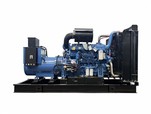
Pump stations are widely used in municipal water supply, drainage, flood control, irrigation, wastewater treatment and industrial water systems. Because pumps often need to operate continuously, an unexpected grid failure can quickly interrupt water transfer and affect the entire system.
For this reason, a reliable pump station diesel generator set is an important part of the emergency power system.
Why Do Pump Stations Need Backup Generators?
Large pumps usually require significant electrical power, especially during startup. If the main grid fails, the backup generator must start quickly and provide stable power to keep pumps, control systems and auxiliary equipment running.
A properly selected diesel generator can help:
- Maintain water supply during power outages
- Support drainage and flood-control pumps
- Prevent interruption of wastewater treatment
- Reduce equipment downtime
- Provide emergency power in remote areas
- Improve overall system reliability
Generator Capacity Must Match Pump Starting Requirements
Selecting generator capacity only according to the rated motor power is often not enough.
Pump motors can require several times their rated current during direct starting. This sudden current demand can cause voltage drops or generator overload if the generator is undersized.
When selecting a diesel generator for a pump station, buyers should consider:
- Total motor rated power
- Motor starting method
- Starting current
- Number of pumps starting simultaneously
- Other electrical loads
- Required power reserve
- Prime or standby operating mode
Soft starters and variable frequency drives can help reduce startup current and may allow a more optimized generator configuration.
Typical High-Power Pump Station Generator Configuration
For large municipal or industrial pumping projects, high-capacity generator sets are commonly required.
One typical Dianbida Power configuration includes:
| Parameter | Specification |
|---|---|
| Generator Capacity | 1250kVA |
| Rated Power | 1000kW |
| Rated Voltage | 400/230V |
| Frequency | 50Hz |
| Phase | Three Phase |
| Rated Current | 1800A |
| Rated Speed | 1500rpm |
| Power Factor | 0.8 |
| Diesel Engine Rated Power | Approx. 1260kW |
The engine power reserve helps the generator respond to sudden load changes and motor starting requirements.
Key Factors When Selecting a Pump Station Generator
1. Motor Starting Method
The starting method has a direct impact on generator sizing.
Common methods include:
- Direct-on-line starting
- Star-delta starting
- Soft starter
- Variable frequency drive
Direct starting normally produces the highest starting current, while soft starters and VFD systems can significantly reduce the load impact on the generator.
2. Stable Voltage and Frequency
Pump motors and control systems require stable electrical output.
A suitable generator should maintain voltage and frequency within an acceptable range during motor startup and load changes. An automatic voltage regulator can help maintain stable output and protect connected equipment.
3. Engine Power Reserve
For pump stations with frequent starting and stopping, sufficient engine reserve power is important.
A properly matched diesel engine allows the generator to respond more effectively to sudden load increases without excessive speed reduction or instability.
4. Continuous Operating Capability
Some pump stations may need to operate for many hours during grid failures, especially in drainage, flood-control and emergency water-supply projects.
The generator should therefore be selected according to actual operating conditions, including:
- Expected running hours
- Ambient temperature
- Installation altitude
- Fuel supply
- Cooling conditions
- Maintenance interval
Open or Silent Generator for Pump Stations?
The installation environment determines which generator structure is more suitable.
Open Type Diesel Generator
Open generator sets are commonly installed in dedicated generator rooms.
Advantages include:
- Easy maintenance
- Good ventilation
- Convenient inspection
- Lower equipment cost
- Suitable for fixed industrial installations
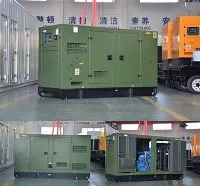
Silent Diesel Generator
Silent generator sets are suitable for urban pump stations or locations with strict noise requirements.
They feature a soundproof canopy that reduces operating noise while protecting internal components.
Automatic Start and ATS System
For emergency pump stations, manual generator startup may not be fast enough.
An Automatic Transfer Switch (ATS) can detect utility power failure, start the diesel generator automatically and transfer the electrical load to the generator.
When utility power returns, the ATS transfers the load back and stops the generator after a cooling period.
This automatic system is particularly useful for:
- Municipal drainage stations
- Flood-control pumping stations
- Sewage pumping stations
- Unattended pump stations
- Emergency water-supply systems
Installation Requirements
Proper installation is just as important as correct generator selection.
A generator room should consider:
- Fresh air intake
- Hot air discharge
- Exhaust gas routing
- Fuel storage
- Noise control
- Vibration isolation
- Cable connection
- Maintenance space
For high-power generator sets, adequate ventilation and exhaust design are especially important because the engine produces considerable heat during operation.
Generator Testing Before Delivery
Before a diesel generator is supplied to a pump station project, several inspections should be completed.
Typical tests include:
- Engine starting test
- No-load operation test
- Load test
- Voltage regulation inspection
- Frequency stability test
- Protection system verification
- Control panel inspection
- Cooling system inspection
- Fuel and oil leakage inspection
For pump station applications, simulated load changes can also help confirm whether the generator can handle motor-starting conditions.


Conclusion
A reliable diesel generator set for pump stations must be selected according to more than just the rated pump motor power. Starting current, motor control method, operating time, installation environment and required power reserve all affect the final generator configuration.
For large pumping projects, a properly matched engine, alternator and control system can provide stable emergency or prime power while reducing the risk of voltage drops and unexpected shutdowns.
Dianbida Power provides customized diesel generator solutions for municipal water systems, drainage stations, irrigation projects, industrial pumping systems and other infrastructure applications.