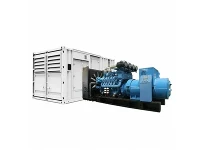
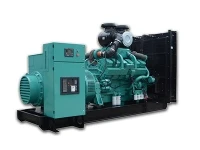
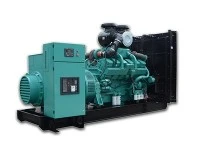
If you’ve ever relied on a diesel generator to keep a business running through a power outage, power a remote construction site, or maintain life-saving equipment in a hospital, you know that quality isn’t just a selling point—it’s a non-negotiable. As a diesel generator supplier who’s spent over a decade troubleshooting client issues, walking installations, and testing units in real-world conditions, I’ve seen firsthand how cutting corners on quality standards doesn’t just lead to headaches for buyers—it can derail operations, cost thousands in repairs, and even pose safety risks. When a generator fails at a critical moment, it’s never a small problem. That’s why I’m laying out the practical, science-backed steps anyone can take to ensure the diesel generator they’re investing in actually meets the quality standards they’re promised.


First, let’s get one thing straight: quality standards for diesel generators aren’t just random rules—they’re designed to ensure consistency, reliability, efficiency, and safety. Organizations like the International Electrotechnical Commission (IEC) set global benchmarks, while regional bodies like the American National Standards Institute (ANSI) or the European Committee for Standardization (CEN) add location-specific requirements. For buyers, this means your process starts long before you even see a generator; it starts with verifying that the supplier’s units are designed and tested to these standards, not just labeled as compliant.
The first step I always advise clients to take is to audit the core components, because a generator is only as good as the parts that make it run. Let’s break this down: the engine, alternator, fuel system, and control panel are the four pillars of a diesel generator, and each has its own set of quality checks. The engine is the powerhouse—most quality manufacturers use industrial-grade diesel engines from reputable brands like Cummins, Perkins, or Deutz, not small consumer-grade engines repurposed for backup power. Consumer engines are built for intermittent use, not running 8, 12, or even 24 hours straight, which is what backup and prime power generators often do.
The alternator, the part that converts mechanical energy from the engine into usable electrical power, is equally important. A high-quality alternator should have a copper winding (not aluminum, which conducts less efficiently and overheats faster) and be rated for the exact load the generator is designed to handle. For example, if you need a unit for a small cabin or mobile home, a compact 2kW Silent Generator from a reliable brand with a copper alternator will outlast an off-brand aluminum-wound unit by years. If you’re powering a small retail store or a mid-sized office, a 6kVA Silent Generator Price from a manufacturer that tests alternators to IEC standards will handle surges from refrigerators, computers, and HVAC systems without failing.
Next, don’t skip independent testing. A supplier might say their generator meets standards, but asking for third-party test data removes all the guesswork. The most critical test here is a load test, which runs the generator at 100% of its rated capacity for a set period (usually 2 to 4 hours) to check for temperature stability, voltage consistency, and fuel efficiency. Poorly made generators will overheat during this test, have voltage drops that damage sensitive electronics, or guzzle way more fuel than advertised.
I once had a client who bought a cheap unbranded generator for their construction site, skipped the load test, and had it fail 2 hours into a power outage when a crane was in use. The unit overheated so badly that the engine seized, costing them $12,000 in lost productivity and repair bills. The supplier refused to take responsibility because there was no proof the generator met any standards. If that client had asked for third-party load test data before purchasing, they would have seen that the unit couldn’t even reach 80% of its rated load without issues.
Another key part of testing is noise level testing, especially if you’re buying a silent generator for residential areas, hospitals, or event spaces. Standards like ISO 3744 set specific criteria for measuring noise output, usually in decibels (dB) at a certain distance. For example, a 125kVA Silent Generator Price for a commercial building should be around 70-75 dB at 7 meters—about as loud as a vacuum cleaner—while a smaller 10kVA Silent Generator Price for a home should be 60 dB or lower, similar to a normal conversation. Always ask for noise test results that follow these international standards; a supplier claiming “silent” without test data might mean their unit is just barely quieter than a loud generator, not actually suitable for noise-sensitive areas.
Once you’ve verified components and testing, it’s time to dig into compliance with regulatory standards, which can vary by location. In the U.S., for example, the EPA sets emission standards for diesel generators to reduce air pollution, especially for units used in areas with strict environmental rules like California. If you’re buying a generator for use in the EU, it needs to meet Stage V emission standards, which limit particulate matter and nitrogen oxide levels. For prime power generators used in off-grid locations, standards for fuel efficiency and run time also come into play. A quality supplier will provide emission certificates and proof of compliance, not just a self-made document.
Warranty and after-sales support are often overlooked, but they’re a huge indicator of quality. A manufacturer that stands behind their generator will offer a minimum 1-year warranty for parts and labor, and often 2 years for the engine and alternator. Cheap generators almost never come with a real warranty, and if they do, it’s full of fine print that makes it impossible to file a claim. What’s more, a quality supplier will have a network of service technicians who can perform maintenance and repairs, so you don’t have to wait weeks for a part when your generator needs fixing. When I sell a generator, I make sure my clients know exactly who to contact for maintenance, and I always include a maintenance schedule to keep the unit running at peak performance.
Let’s talk about sizing, because buying a generator that’s too small or too big is a common mistake that can make even a high-quality unit perform poorly. Sizing means matching the generator’s rated power (in kVA or kW) to your total load, plus a 20-30% buffer for surges—those temporary spikes in power demand when you turn on a heavy appliance like an air conditioner or a microwave. For example, if your total load is 8 kW, you don’t need a 8 kW generator; a 10 kW unit will handle surges without straining. If you buy a unit that’s too small, it will run at full load all the time, leading to premature wear and tear. If it’s too big, it will short-cycle (turn on and off frequently), which also damages the engine and wastes fuel.
I’ve seen clients who think a bigger generator is always better, only to end up spending more on fuel and maintenance than they needed. A few months ago, a café owner came to me after buying a 15kVA unit when they only needed a 10kVA Silent Generator; their monthly fuel bill was 30% higher than expected, and the generator was having issues with short-cycling. We swapped it out, and their costs dropped significantly, and the unit ran much more reliably.
Another thing to check is the build quality of the generator itself, especially for silent generator models, which have extra enclosures to reduce noise. The enclosure should be made of thick, weatherproof steel that’s rust-resistant, with properly sealed doors and vents to prevent rain from getting inside. Poorly built enclosures have gaps that let noise escape and water in, which damages the internal components. The frame that holds the engine and alternator should be heavy-duty, so there’s no vibration that can cause parts to come loose. A 4kW Silent Generator meant for mobile use, for example, needs a sturdy frame that can handle being transported over rough roads without shifting parts.
Don’t forget to ask for references from other customers in your industry or location. A reputable supplier should be able to give you contact information for clients who have used their generators for 6 months to a few years, so you can ask about reliability, performance, and after-sales support. I always give potential clients a list of references because I know our generators hold up, and we’re proud to stand behind our work. If a supplier hesitates to give you references, that’s a red flag—they probably don’t have many happy customers.
Now, let’s address a common question: what about cost? It’s tempting to go for the cheapest generator, but cutting corners on quality will end up costing you more in the long run. A high-quality diesel generator might cost 20-30% more upfront, but it will last 2-3 times longer, have lower fuel and maintenance costs, and reduce the risk of downtime. When you’re investing in a generator, you’re investing in peace of mind, not just a piece of equipment.
For example, a cheap 6kVA generator might cost $1,000, but it will need major repairs every 2 years, and it will last 5 years at most. A quality 6kVA Silent Generator Price from a reputable supplier might cost $1,500, but it will last 10 years or more, with minimal repairs. Over a 10-year period, the cheap generator will cost you $5,000 in upfront costs plus $2,000 in repairs, totaling $7,000, while the quality generator will cost $1,500 plus $500 in repairs, totaling $2,000. That’s a huge difference.
At the end of the day, ensuring a diesel generator meets quality standards is about doing your homework, asking the right questions, and working with a reliable supplier. As someone who’s been in this industry for years, I’ve seen that there’s no shortcut to quality. It’s about choosing parts that are built to last, testing units to make sure they perform as promised, complying with regulatory standards, and having the support to keep your generator running when you need it most.
If you’re in the market for a diesel generator, whether it’s a small unit for home use or a large industrial generator for your business, don’t hesitate to reach out to discuss your specific needs. Every application is different, and I’m here to help you find a generator that meets all the required quality standards, fits your budget, and gives you the reliability you need to keep operations running smoothly.
References
International Electrotechnical Commission (IEC). (2020). IEC 60034: Rotating electrical machines – Part 1: Rating and performance.
International Organization for Standardization (ISO). (2017). ISO 3744: Acoustics – Determination of sound power levels and sound energy levels of noise sources using sound pressure – Engineering methods for an essentially free field over a reflecting plane.
U.S. Environmental Protection Agency (EPA). (2022). Nonroad Diesel Engine Standards.
European Committee for Standardization (CEN). (2019). EN 15858: Stationary diesel generating sets – Safety requirements.