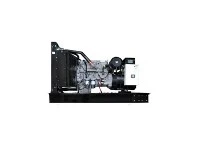
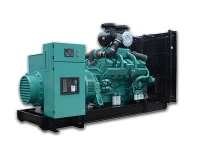
Hey everyone, if you’re here because you’re shopping for a backup power setup, chancesize you’ve stumbled on 15kW diesel generators—and you’re probably asking the same question a lot of our customers do: what’s the real power quality like on these things? As a supplier of diesel generators, I get this question all the time, and it’s not just a random curiosity. Power quality isn’t just a buzzword for engineers; it’s what keeps your fridge from dying mid-cook, your office computers from crashing, and your workshop tools running without sputtering or breaking. Today I’m breaking down exactly what the power quality of a 15kW diesel generator actually is, how it stacks up to smaller or larger units, and why it matters for your specific needs.
First off, let’s get one thing straight: “power quality” isn’t just about how much wattage you get. It’s a whole set of factors that make that power safe and reliable for your gear. Think of it like water quality—you don’t just want water that flows; you want it free of sediment, at the right pressure, and consistent. For generators, the big metrics here are voltage stability, frequency consistency, total harmonic distortion (THD), and how the unit handles loads when they kick on or off (that’s called load transients). All of these things decide if your $2,000 commercial oven, your kid’s gaming setup, or your home medical equipment will work right when the grid dies.
Now, a 15kW diesel generator falls right in that sweet spot for a lot of people: not too small for a whole home or a small business, and not so big that it’s overkill (or way more expensive) if you don’t need massive power. But before we dive into its power quality specifics, let’s compare it to smaller units because that’s where most folks start. For example, a lot of first-time shoppers look at a 5000 Watt Diesel Generator as a backup, but a 5kW unit is only enough for a few critical circuits—fridge, lights, maybe a sump pump. The power quality on these smaller models can be a little shakier, mostly because their engines are smaller, which means they have a harder time keeping up with sudden load changes. A 15kW unit, though, has a bigger engine, a more robust alternator, and better control systems to handle those loads without dropping voltage or throwing off frequency. That’s a big deal if you’re running more sensitive gear, like laptops, LED lighting, or even small CNC tools.
Let’s get into the nitty-gritty of the 15kW’s power quality. First, frequency. Most countries run on either 50Hz or 60Hz, and the generator has to stay within a tiny range—usually around ±1% for sensitive equipment—because too much fluctuation can mess up motors, compressors, and electronics. A well-built 15kW diesel generator uses a governor system to adjust fuel flow automatically, keeping frequency rock solid. Unlike gas generators, which can have more frequency drift when they’re under load, diesel units tend to hold that number steady even when you add a big appliance, say a washing machine or a space heater, all at once. That’s one of the reasons our customers pick diesel over gas for long-term backup or continuous use.


Next, voltage stability. Voltage fluctuation—dips or spikes—are where most gear gets damaged over time. A spike might fry a computer’s motherboard, and a deep dip could make a fridge’s compressor cycle incorrectly, shortening its life. The alternator on a 15kW diesel gen set is built with thicker windings and a voltage regulator that’s calibrated to adjust in milliseconds when loads change. At full load (15kW), it will stay within ±2% of the rated voltage, which is way better than the minimum required for most residential and commercial devices. Compare that to a smaller unit like a Generator 5kVA, which often has a voltage tolerance of ±3% or more because its components are scaled back to save cost. For anyone running sensitive electronics, that extra stability is non-negotiable.
Then there’s THD—total harmonic distortion. This is the big one a lot of people don’t hear about, but it’s probably the most important power quality metric. Harmonics are weird, extra electrical waves that get created when power runs through digital devices, motors, or other “non-linear” loads. Too much THD can cause overheating in wiring, shorten the life of gear, even cause circuit breakers to trip randomly. A good 15kW diesel generator will have a THD rating of less than 5%, which is the industry standard for “good power” that won’t mess with your stuff. Cheaper smaller generators might hit 10% or more, and larger units, like an 800kw Diesel Generator for a whole factory, can have higher THD if they’re not built with advanced alternator designs. Our 15kW models use a brushless alternator and modern control panels to keep THD under 3% for most runs, which is cleaner than what a lot of home grid power has—wild, right?
Now, let’s talk about how the 15kW handles different use cases, because power quality matters more depending on what you’re using it for. For residential users: if you’re powering a 2,500 sq ft home with central AC, a well, fridge, oven, and a few lights, a 15kW unit is perfect, and its power quality will keep all that gear running without issues. I’ve had customers tell me they used their smaller gas generator before, and their LED bulbs would flicker when the AC kicked on, but switching to our 15kW diesel fixed that right away—no more flicker. For small businesses: a 15kW can run a coffee shop’s espresso machine, POS system, and refrigeration, or a small workshop with a few power tools. The low THD here means the POS won’t glitch during a rush, which is a huge win for avoiding lost sales.
I get it, some people might wonder if stepping up to a bigger unit is better. For example, an 18kVA Generator Price is comparable to a 14.4kW unit (since kVA is roughly kW divided by 0.8 for power factor), so not that much bigger than 15kW. But an 18kVA unit has a slightly larger engine, so it can handle heavier peak loads, but the power quality is almost identical to a 15kW—so unless you’re planning to add more gear down the line, the 15kW is a more cost-effective pick. On the flip side, a 500kW unit is way too big for residential or small commercial use; it’s built for large buildings or industrial sites, and while its power quality is good, it’s overkill and way more expensive to buy and maintain.
Wait, let’s address a common myth: people think diesel generators have worse power quality than inverter generators. Yeah, small inverter gens do have really clean power, but they’re only 2-5kW, so they can’t handle big loads. A 15kW diesel is a standby or portable unit (we sell both, fyi) that has power quality on par with most inverter gens, but with the power to run most of your home or small business. That’s the tradeoff, and it’s why the 15kW is such a popular model.
Now, what factors affect the power quality of your 15kW unit, beyond the unit itself? First, installation. If you hook it up wrong—bad wiring, wrong transfer switch—you’ll get power issues even if the generator is great. That’s why we always tell customers to work with a licensed electrician to install their generator. Second, maintenance. A dirty air filter, old fuel, or a worn governor will throw off frequency and voltage over time. If you keep up with basic maintenance (changing oil, filters, testing it monthly), your 15kW will keep that clean power for years. Third, load size. If you run it at less than 30% load all the time, diesel generators can “wet stack,” which messes with performance and can slightly impact power quality. So don’t buy a 15kW unit and only run a few lights on it—use it close to its rated load sometimes, or upgrade if you know you’ll never use the full capacity.
Let me share a quick customer story to make this real. Last month, a customer emailed us saying their 8-year-old 10kW diesel generator was causing his workshop’s 3D printers to glitch every time he turned on his air compressor. He was on the fence about buying a new unit, and we suggested a 15kW model, explaining its better alternator and lower THD. He got it installed a few weeks ago, and sent a note saying the glitches are totally gone. That’s exactly what power quality does—you don’t notice it when it’s good, but you notice it when it’s bad.
If you’re still trying to figure out if a 15kW is right for you, or want to ask more about power quality specs, reach out to our team to chat. We don’t push the most expensive unit—we help you pick what fits your needs, whether that’s a 15kW, a smaller generator, or even a larger unit if you need it. For example, if you’re planning to expand your workshop in the next year, maybe we’d point you toward an 18kVA unit instead, but for most people, 15kW is the sweet spot.
At the end of the day, power quality on a 15kW diesel generator is solid—way better than smaller units, perfect for most residential and small commercial uses, and reliable enough for long-term backup. It’s not the over-the-top power quality of tiny inverter gens, but it’s more than enough to keep all your important gear running without damage or hassle. If you’re ready to shop, we’ve got all the sizes covered, from compact models to big industrial ones like the 500kw Diesel Generator for larger needs. Hit us up to talk through your setup—we’re here to help.
References
- Electrical Safety Foundation International. (2022). Generator Power Quality: Understanding Harmonics, Voltage Stability, and Frequency. ESFI.org
- Cummins Inc. (2023). Diesel Generator Power Quality Standards & Performance Guidelines. Cummins Technical Documentation
- Underwriters Laboratories (UL). (2021). Standard for Standby Generators (UL 2200) – Power Quality Requirements. UL Standards Database
- Generator Supply Association. (2022). Comparing Power Quality Across Diesel Generator Sizes: 5kW to 500kW. GSA Industry Report