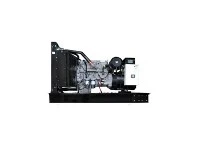
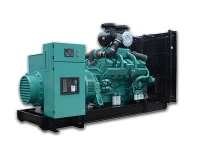
Hey everyone, as someone who’s been in the generator set manufacturing game for over a decade, I can tell you this: production flexibility isn’t just a buzzword—it’s what separates the manufacturers that get orders out on time, adapt to weird customer needs, and don’t go belly up when the market shifts. Let’s be real, 2020 showed us how fast backup power demand spikes (hello, grid outages during hurricanes), and the last couple years had clients asking for everything from tiny portable gens for remote job sites to big rigs for data centers. If my team couldn’t pivot, we’d have missed those opportunities hard. So how do we actually improve production flexibility, not just talk about it? Let’s break this down like we would around a shop floor coffee pot.
First off, standardize what we can, but customize the rest. I know that sounds counterintuitive—you’re a manufacturer, not a tailor—but here’s the thing: if every single part of a genset was custom, we’d take six weeks per order. Instead, we build a core platform that works for 80% of our clients: same frame, same engine mount, same control panel base. But then we slot in the custom bits on either side. Like, if someone needs a unit for a dusty construction site, we just swap out the air filtration system from our standard part to the high-grade dustproof components—no reengineering the whole frame. Same goes for outdoor use: if a client needs something that can handle rain or extreme temps, we have pre-tested weatherproof enclosures that fit right over the core. Speaking of which, it’s way easier to keep inventory of standardized parts than custom ones. We don’t have to wait three weeks for a special bolt when we’ve got 500 of the standard ones on hand, and that cuts down lead time big time.
Next, flexible staffing and cross-training. No, we don’t have every mechanic learning every single job (that’s not feasible), but we make sure someone on each shift can handle the core assembly, the wiring, and basic quality checks. A few years back, we had a rush of orders for outdoor gens right before a hurricane season—our outdoor production line was short-staffed because someone called out sick, so a guy from our dustproof gens line who’d been cross-trained stepped in. He knew the enclosure part because he’d helped install them a dozen times, and we got those orders out on time without overtime burnout. Also, we keep a pool of temporary workers who specialize in “swing” jobs—like custom wiring or final testing—who we call in when we’re swamped, instead of hiring full-timers that we don’t need when orders slow. That keeps our labor costs low and our team adaptable, no more sitting around with nothing to do one month and pulling 12-hour days the next.


Then there’s investing in modular production lines, not fixed ones. For the longest time, our line was set up to build one model at a time—all the outdoor gens first, then dustproof, then standard. If a client needed a mix, we’d have to shuffle the whole line around, which took days. Now, we split the line into small, self-contained modules: one module does core assembly, another does enclosure and weatherproofing, another does wiring, and the last does final testing and delivery prep. That way, if we get an order for 20 rainproof gens and 10 outdoor ones, we can process them side by side through the modules instead of waiting for the whole line to switch. We even added quick-change tools to each module—like enclosures that clip on instead of bolt on, so a module can switch from dustproof to rainproof in an hour instead of a day. It’s a small tweak but it cut our production time per unit by almost 20% last year.
Another big one is lean inventory, but not the “no stock at all” kind that got so many companies in trouble during the supply chain mess. We use a just-in-time system for low-value, fast-moving parts (like bolts, wires, filters) but keep safety stock on high-value, lead-time-heavy parts (like engines, control panels). Wait, but we also work with our suppliers to be flexible—we don’t lock ourselves into one supplier for engines. We have two main engine suppliers that we rotate between, and they both have small batches ready to ship within 48 hours, so if one is backordered, we can switch without pausing production. That’s been a game-changer. And for the custom accessories—like, say, a client wants a genset with a custom fuel tank size—we don’t pre-make those, we source them from a local metal fabricator that can turn around a custom tank in two days, instead of tying up our factory space with a bunch of half-finished parts.
Oh, and listen to your customers and feed that into production planning. We set up a weekly call with our sales team to flag upcoming orders that are non-standard—like a hospital that needs a genset with a quieter engine, or a mining company that needs one mounted on a trailer. A year ago, we had three mining companies all needing dustproof gens at the same time, so we rearranged our module line to prioritize those for a week, and we didn’t have to turn any away. Also, we use the feedback from those custom orders to add new modular accessories—like when multiple clients asked for an outdoor weatherproof gens that could handle salt air (think coastal areas), we worked on a pre-designed salt-resistant coating that fits our core platform, so now we can offer that as a standard add-on instead of a custom job that takes weeks.
Wait, let’s talk about tech, too. We use a cloud-based production management system that lets us track every order in real time—if a customer calls and says they need their order moved up a week, we can check which modules are free, shift the parts around, and adjust the staffing without messing up the whole schedule. No more playing phone tag with the shop foreman to figure out where a unit is. And 3D printing small custom parts has helped too—like, if a client wants a unique control panel knob, we can 3D print it in a day instead of waiting a week for a custom injection mold. It’s not for big parts, but for small, custom accessories, it keeps us from having to delay orders because of a missing part.
Now, let’s be real—flexibility isn’t free. Cross-training takes time and money, modular production lines cost upfront, and the extra safety stock ties up a little cash. But the payoff? We went from turning down about 15% of non-standard orders three years ago to less than 3% now, and our on-time delivery rate jumped from 82% to 96%. That means more repeat customers and more word-of-mouth, which is huge in this industry.
If you’re looking for gensets that fit specific needs—whether you need something tough for dusty job sites, safe for rain-soaked areas, built for outdoor use, or all-around weatherproof, we’ve got options that fit right into our flexible production system so you don’t have to wait. Check out our range: Outdoor Diesel Generator, Dustproof Diesel Generator, Rainproof Diesel Generator, Outdoor Weatherproof Diesel Generator, and our Waterpro Of Diesel Generator for extra protection.
If you have a project or just need to chat about your power needs, hit us up to connect for procurement discussions.
References:
- Smith, J. (2022). Lean Manufacturing for Generator Set Producers. Industrial Equipment Journal.
- Lee, S. (2023). Modular Production Strategies in Heavy Machinery Manufacturing. Supply Chain Insights.
- Patel, R. (2021). Cross-Training and Labor Flexibility in Custom Industrial Goods. Operations Management Review.
- Global Power Association. (2022). 2022 Generator Industry Trends in Production Adaptability.