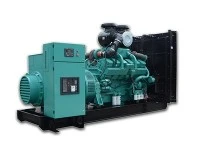
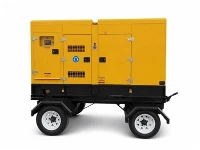
If you’ve ever relied on a natural gas generator to keep your home, business, or industrial site powered during grid outages, you know how critical it is to understand how your equipment performs when conditions shift. One of the most common questions we get as a natural gas generator supplier is: How does a natural gas generator handle windy conditions? It’s not a trivial question—wind can disrupt everything from fuel supply to airflow to engine cooling, and even small adjustments in performance can make a big difference when every minute of power matters. Today, we’re breaking down the science behind how natural gas generators operate in wind, the common challenges that arise, and how to ensure your unit runs reliably no matter how blustery it gets.
First, let’s start with the basics: how a natural gas generator works. Unlike diesel generators, which rely on compression-ignited combustion of liquid fuel, natural gas generators mix gaseous natural gas (often piped directly or stored in on-site tanks) with air, compress the mixture, and ignite it with a spark plug. That combustion turns a turbine or engine crankshaft, which spins an alternator to produce electricity. The key systems that impact performance in wind fall into three main categories: fuel delivery, airflow, and structural stability. Each of these interacts with wind differently, and understanding those interactions is where many users run into unexpected issues.
Let’s dive into fuel delivery first. Natural gas is a low-pressure fuel, typically moving at pressures between 0.25 and 5 psi for residential and small commercial units, and up to 10 psi for larger industrial models. Wind doesn’t just blow air—it creates pressure differentials around any object, and those differentials can disrupt gas flow lines. For example, if a generator’s external gas line is mounted on the side of a building or a rack, a strong crosswind can create low-pressure areas on the leeward (downwind) side of the line, which can either slow gas flow or, in rare cases, cause backflow into the line. That’s not just a hypothetical issue—we’ve worked with several small business owners over the years who reported their generators cutting out during wind storms, only to discover that the unprotected gas line had shifted position slightly, creating enough pressure differential to starve the engine.
Compare that to diesel generators, which use high-pressure fuel systems (often 30,000 psi or more) that are far less sensitive to ambient pressure changes. That’s why some users might assume diesel is more reliable in wind, but that’s not always the case—especially if you’re dealing with large, stationary units. For example, a marine diesel generator for sale that’s designed for offshore or coastal use is built to handle wind-related pressure shifts, but it’s also engineered with weatherproof housing and reinforced fuel lines. Natural gas generators, on the other hand, often need targeted modifications to their fuel delivery systems to perform well in windy conditions. At our company, we offer custom fuel line shielding and pressure regulators that adjust automatically to ambient wind pressure, ensuring consistent gas flow even during 50+ mph gusts.


Next up is airflow, which is critical for two reasons: combustion and cooling. For combustion, a natural gas generator needs a precise air-fuel ratio—typically around 10 parts air to 1 part natural gas, by volume. Wind can skew this ratio in two ways: either it pushes extra air into the air intake, making the mixture too lean (which causes the engine to misfire or shut down), or it blocks the intake entirely (which causes the engine to run hot). Larger generators, like industrial units, are more prone to this because their air intakes are bigger and more exposed, while smaller portable models might be more affected by sudden gusts that can tip them slightly, blocking the intake.
Cooling airflow is another big factor. Natural gas engines run at optimal temperatures between 180 and 220 degrees Fahrenheit, and they rely on consistent airflow through their radiators or heat exchangers to stay in that range. Wind can either over-cool the engine (especially in cold, windy weather) or, more commonly in warm climates, create turbulence around the cooling system that reduces efficiency. Turbulence is the big culprit here—when wind hits a solid surface, it breaks into swirling eddies that can disrupt the smooth flow of air through the radiator. That’s why we often recommend positioning generators in sheltered areas, like behind a wall or in a purpose-built enclosure, but not so far that exhaust fumes can’t dissipate (exhaust backflow is another wind-related issue that can cause engine damage).
Let’s put this into a real-world example. Last winter, we worked with a food processing plant in the Midwest that had a 15000 watt diesel generator for sale from a competitor, but they’d recently upgraded to a natural gas generator to cut fuel costs. During a 60-hour wind storm that brought gusts up to 55 mph, their new natural gas generator failed three times—each time, the engine ran too lean because the air intake was being flooded with extra wind-blown air. They’d installed the generator in an open area next to the plant’s gas line, and there was nothing around to shield the intake from crosswinds. Our team came out, installed a custom wind shield around the air intake and fuel line, calibrated the air-fuel ratio to account for ambient pressure, and added a small backflow preventer to the gas line. During the next major wind event, the generator ran nonstop for 72 hours without a single interruption, powering the plant’s refrigeration units and preventing thousands of dollars in food spoilage.
Structural stability is the third key factor, especially for larger generators. When a generator is rated for a certain wind speed—most standard residential models are rated for up to 50 mph gusts, while industrial models can handle 70 mph or more—their mounting is designed to resist lateral forces. But wind gusts, especially sudden ones like thunderstorm winds, can create far more force than the unit is rated for if it’s not anchored properly. For example, a 33kVA generator weighs around 1,500 pounds, but a 60 mph gust can exert over 500 pounds of lateral force on the unit—enough to shift it off its mounting pads, which can damage fuel lines, electrical connections, or the alternator. We’ve seen this happen more often in areas where generators are installed on flat, unimproved ground without concrete footings, instead being mounted on skids or temporary frames.
Now, let’s talk about how natural gas generators compare to other types of generators in wind. Diesel generators, as we mentioned earlier, are less sensitive to airflow and fuel pressure changes, but they’re far more expensive to operate in most areas, and they produce more emissions. Propane generators are another option, but propane is stored as a liquid under pressure, so wind can affect tank pressure if the tank is exposed to extreme winds. Natural gas generators, when properly configured, offer a middle ground: they’re cheaper to run than diesel, produce fewer emissions, and with a few adjustments, they can be just as reliable in windy conditions. The key is working with a supplier that understands the unique needs of natural gas generators in variable weather, not just a one-size-fits-all solution.
One common misconception we hear is that natural gas generators can’t handle strong winds at all, but that’s simply not true. The 750kVA genset we supply for large industrial sites is tested to withstand 75 mph gusts during operation, and we’ve had multiple clients use these units through hurricanes, blizzards, and derechos without failure. The difference is in the preparation. For residential and small commercial users, that might mean adding a simple wind shield to the air intake and securing the generator to concrete pads. For larger industrial sites, that could involve custom engineering for fuel lines, airflow management, and structural mounting to match the specific wind patterns of their location.
Another thing to consider is cold, windy weather, which often comes with wind chill that makes temperatures feel much lower than the actual ambient temperature. Natural gas is a vapor at standard pressure, but when it’s extremely cold, it can condense in the fuel line, creating liquid droplets that can starve the engine. Wind chill accelerates this condensation, especially if the fuel line is uninsulated. That’s why we always recommend insulating gas lines for generators in cold climates, and adding a low-temperature fuel regulator that prevents condensation even when temperatures drop below freezing. We recently upgraded a residential client’s 25kW diesel generator for sale to a natural gas unit, and their biggest concern was winter reliability in northern Minnesota. We installed insulated fuel lines, a heated air intake, and a pressure regulator calibrated for cold ambient conditions, and during the -20 degree weather with 40 mph gusts last year, the generator ran perfectly when the grid went out for 12 hours.
Now, let’s talk about what to look for if you’re in the market for a natural gas generator and concerned about windy conditions. First, check the unit’s wind rating: all reputable suppliers will list the maximum gust speed the generator can handle while operating, and the maximum gust speed it can handle while idle. If you live in an area with frequent high winds, look for units with higher ratings, or that come with optional wind shielding packages. Second, make sure the supplier offers customization for fuel and airflow systems—off-the-shelf units might work in mild conditions, but they often lack the adjustments needed for windy areas. Third, ask about installation support: a good supplier will not just sell you a generator, but help you position it correctly, secure it, and calibrate it for your local wind patterns.
At the end of the day, the performance of a natural gas generator in windy conditions doesn’t come down to luck—it comes to proper design, preparation, and maintenance. We’ve been supplying generators for over a decade, and we’ve seen firsthand how a small adjustment can turn a unit that fails during wind storms into a reliable power source that keeps businesses running and homes warm when it matters most. Whether you’re looking for a small unit for backup power at home, a mid-sized unit for a commercial site, or a large industrial genset that can handle extreme weather, we have the expertise and products to meet your needs.
If you’re ready to explore your options or have questions about how a natural gas generator would perform in your specific area, we encourage you to reach out and connect for a procurement conversation. Our team can walk you through our range of products, answer technical questions about performance in windy conditions, and help you find the right solution for your power needs. Don’t wait until the next wind storm hits—ensure your power is reliable no matter what the weather brings.
References
- U.S. Energy Information Administration. (2022). Natural Gas Generator Performance Characteristics.
- National Fire Protection Association. (2021). Standard for Stationary Engines, Generators, and Associated Equipment (NFPA 37).
- International Code Council. (2020). International Mechanical Code: Generator Installation Requirements.
- Gas Machinery Research Council. (2021). Effects of Ambient Pressure on Natural Gas Fuel Systems.
- American Society of Heating, Refrigerating and Air-Conditioning Engineers. (2020). Thermal Management for Stationary Power Generation Equipment.