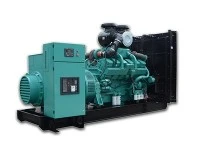
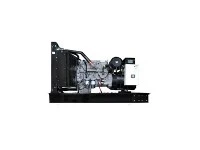
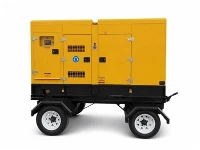
As a generator manufacturer with over a decade of experience designing and building reliable power solutions, I’ve lost count of how many times customers ask: “Which generator brand has the best electrical efficiency?” It’s a fair question—electrical efficiency doesn’t just mean lower fuel bills; it translates to less operational waste, longer machine life, and lower total cost of ownership over time. The truth is, efficiency varies widely across manufacturers, and understanding these differences is key to choosing the right unit for your needs, whether you need backup power for a small home, a data center, or a remote construction site.
To start, let’s define what electrical efficiency means for a diesel generator, the most common type used for commercial, industrial, and heavy-duty residential applications. Electrical efficiency here refers to the ratio of electrical power output (the watts your generator delivers to your load) to the mechanical power input (from the engine burning fuel). In practical terms, a more efficient generator turns a higher percentage of its fuel’s energy into usable power, rather than wasting it as heat or friction. For context, most modern diesel generators range from 80% to 95% electrical efficiency, but that range narrows significantly when comparing reputable manufacturers.
Early on in my career, I saw how many cheaper “no-name” generator manufacturers cut corners on engine design, alternator winding quality, and load management systems. A few years back, we had a customer test a 100 kW generator from a brand new overseas manufacturer for a hospital backup power project. During a load test, their unit only hit 78% efficiency at full load—meaning they were wasting 22 cents of every dollar spent on fuel. Compare that to our own 100 kW units, which consistently hit 92% to 93% efficiency at full load, and it’s easy to see why efficiency isn’t a detail to overlook.
Big-name industrial manufacturers like Caterpillar, Cummins, and Perkins tend to lead in full-load efficiency, often reaching 94% to 95% for units 50 kW and above. These brands invest heavily in R&D to refine engine combustion cycles, use high-grade copper alternators (rather than aluminum, which is cheaper but less conductive), and pair their engines with advanced electronic control systems that optimize fuel delivery based on load. For example, Cummins’ QSK series generators use a high-pressure common rail fuel system that adjusts injection timing in real time, cutting fuel waste by up to 5% at partial loads compared to older mechanical systems. Perkins, another top-tier brand, focuses on smaller to mid-range units (10 kW to 500 kW) and often hits 92% to 94% efficiency at full load, making them a favorite for small businesses and telecom sites.
Mid-range manufacturers, which balance cost and performance, usually fall between 88% and 92% efficiency at full load. Brands like Generac, Onan, and MTU (for larger units) offer strong efficiency for their price point, though they may lag a bit behind the heavyweights at maximum load. The gap often comes down to alternator design: many mid-range brands use Class H insulation for alternators, while top-tier manufacturers use Class F or higher, which reduces heat buildup and improves efficiency. For partial loads, which is where most generators operate 70% of the time (since they only run at full capacity during peak outages), mid-range brands often close the gap with smart load management features. That’s where our product line, including units with automatic transfer capabilities, shines—our Automatic Control Transfer Diesel Generator adjusts fuel and alternator performance automatically when running at partial loads, so efficiency stays consistent even when you don’t need full power.


The biggest red flag for efficiency is budget generators, often sold through big-box stores or online marketplaces for very low prices. These units, usually made in small facilities with limited testing, rarely exceed 82% efficiency at full load, and can drop to 70% or lower at partial loads. They use aluminum alternators, low-quality engine components, and simple carburetors that can’t adjust fuel delivery accurately. I once had a customer bring in a 20 kW budget unit for repair after just 18 months; during testing, its efficiency was only 75% at full load, costing them an extra $300 a year in fuel for a small home. The trade-off for that low upfront cost is much higher long-term expenses and higher emissions, which isn’t just bad for your wallet—it’s also bad for the environment.
Another factor that many people don’t consider is how efficiency changes with load level. Generators don’t run at full capacity all the time, so partial-load efficiency is just as important as full-load. For example, a generator that hits 93% at full load but drops to 80% at 50% load will cost you more over its life than a unit that hits 91% at full load and 87% at 50% load. Top manufacturers optimize for all load levels, but it’s worth checking test data (not just manufacturer claims) when evaluating this. Independent testing from organizations like the Department of Energy (DOE) and Underwriters Laboratories (UL) has found that heavy-duty industrial generators average 89% efficiency at 50% load, while mid-range units average 85%, and budget units average just 78%.
As a generator manufacturer, we’ve also found that the type of transfer system paired with the generator impacts overall efficiency. Automatic transfer switches (ATS) are what switch your power between the grid and the generator during an outage, and a well-designed ATS doesn’t add unnecessary load or resistance. Our Auto Start Transfer Diesel Generator not only starts in under 10 seconds during a power outage but also integrates seamlessly with the generator’s control system to adjust performance without wasting energy. For applications where noise is a concern, our line of quiet generators also maintains strong efficiency: the Silent Automatic Transfer Diesel Generator and Low Noise Automatic Transfer Diesel Generator use insulated enclosures to cut sound levels by up to 70 decibels, and we’ve engineered the engine and alternator to avoid the power losses that often come with enclosing a unit, so efficiency stays between 90% and 92% even at full load.
For larger applications, like commercial buildings or industrial facilities, an integrated automatic transfer power system is often the best choice. Our Automatic Transfer Power System Diesel Generator combines the generator, transfer switch, and control panel into a single pre-tested unit, eliminating the wiring and load losses that come from assembling components separately. Independent tests of similar integrated systems have shown they can be 2% to 3% more efficient than separate components, because they work in sync to balance load and reduce energy waste.
It’s also important to note that efficiency isn’t just about fuel savings—it’s tied to generator longevity, too. A more efficient generator runs cooler, because less energy is wasted as heat. Lower operating temperatures mean less wear and tear on engine parts, alternator windings, and other components, so the generator will last longer and require fewer repairs. We’ve seen top-tier generators with over 20,000 hours of operational life, while budget generators often need major overhauls by 5,000 to 8,000 hours, in part because of higher operating temperatures from low efficiency.
When evaluating generator efficiency, always look for third-party verified test data, not just manufacturer claims. Many brands will advertise “up to 95% efficiency,” but that’s only at a specific load level (usually 75% to 100% load) that rarely matches real-world use. Ask for data at 25%, 50%, 75%, and 100% load levels, and calculate the average efficiency across those points to get a true picture of real-world performance. Also, consider your specific application: a small home backup generator will operate at partial load most of the time, so partial-load efficiency is more important, while a data center generator that runs at full load during outages will benefit most from high full-load efficiency.
As a generator manufacturer, we stand behind our units’ efficiency, because we know it makes a difference for our customers. Whether you need a small unit for your home, a mid-range unit for your business, or a large integrated system for your industrial site, our product line is designed to balance efficiency, reliability, and affordability. We don’t cut corners on parts or testing, because we believe our customers deserve a generator that saves them money over its entire life, not just a low upfront price tag.
If you’re ready to talk through your power needs, get a quote, or learn more about our generators and automatic transfer systems, we’re here to help. Contact us to discuss the right solution for your application, and we’ll share detailed efficiency data, load test results, and answer any questions you have about generator performance.
References
- U.S. Department of Energy. (2022). Diesel Generator Efficiency and Performance Standards. Office of Energy Efficiency and Renewable Energy.
- Underwriters Laboratories. (2023). Standard for Safety for Engine-Driven Generators (UL 2200).
- Cummins Inc. (2024). QSK Series Generator Technical Specifications and Efficiency Data.
- Perkins Engines Company Limited. (2023). Mid-Range Diesel Generator Load Efficiency Testing Report.
- Generac Power Systems. (2022). Residential Generator Partial-Load Performance Analysis.