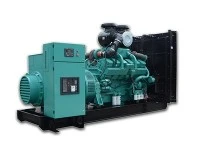
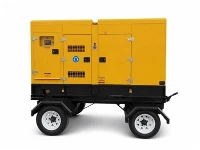
Hey there! If you’re the kind of person who relies on steady, reliable power—whether for a job site, a remote cabin, or emergency backup—you know an 8kw diesel generator isn’t just a hunk of metal and fuel. It’s your safety net, your workhorse, the thing that keeps things running when the grid flips off. As the team that builds and ships these bad boys (we’re the folks behind the 8kw Diesel Generator that lots of customers trust), I’ve tested more of these units in the last few years than I can count—and let me tell you, cutting corners on testing? That’s how you end up with a dead generator when you need it most.
Testing an 8kw diesel generator isn’t just pressing a button and calling it a day. It’s a step-by-step process that checks every single part, from the tiny fuel filter to the big output terminals, to make sure it’s gonna hold up under pressure. I’m gonna walk you through exactly how we do it at our shop—stuff that’s not in the generic “generator manual” fluff—because we care about our customers, not just slapping together units and shipping ‘em. Let’s dive in.
First off, before you even think about turning that generator over, you gotta do the pre-test checks. This is the boring stuff that makes 90% of issues go away before they start, so don’t skip it. I’ve seen so many new owners fire up their generator for the first time, only to have it sputter and die because they didn’t check the oil. Diesel engines are finicky that way—no oil = no go, full stop. Grab your dipstick (it’s usually a bright yellow handle, easy to spot) and pull it out, wipe it clean, stick it back in all the way, pull it again. The oil level should be between the two notches on the stick. If it’s low, top it off with the right weight oil—we recommend 15W-40 for our 8kw units, but check your manual to be sure.
Next up, check the fuel. For diesel generators, you want clean, fresh diesel—no water, no gunk sitting at the bottom of the tank. If you’ve had a generator sitting for a while, drain that old fuel and put in new stuff. Water in diesel is a huge problem; it can freeze in cold weather or clog the fuel injectors, and our 8kw Diesel Generator? It needs consistent fuel flow to hit that 8kw output smoothly. Also, make sure the fuel filter isn’t clogged—if it’s been a year or 100 hours of use, swap it out. Clogged filters mean the engine has to work harder, which can throw off power output and even damage the engine over time.
While you’re at it, give the air filter a once-over. Diesel engines breathe, too, and if the air filter is covered in dust or dirt, it can starve the engine of oxygen, leading to incomplete combustion, black smoke, and lower power. For our portable units (we also make stuff like Generator Stick Welder units that pair great with our 8kw generators, by the way), the air filter is easy to access—just pop off the cover, take out the filter, tap it against a hard surface to get rid of loose dirt, or replace it if it’s super dirty.
Once you’ve nailed the pre-test checks, it’s time for the static test—no fuel on, no running, just checking all the electrical connections. Our team does this every single time because loose wires are one of the top causes of generator failures. Grab a socket set and go over every terminal on the control panel, the output breaker, and the alternator connections. Make sure they’re tight—no wiggling wires, no rust, no frayed insulation. If you see a wire with cracked plastic, wrap it in electrical tape or swap it out. Also, check the battery terminals—corrosion here can kill your generator before you even start it. A quick scrub with a wire brush and some baking soda water will fix most corrosion issues, and make sure the terminals are tight.
Now we get to the fun part: the start-up test. First, make sure the generator is on a level surface—diesel engines need that to have consistent oil pressure, and tipping it can cause fuel to flow where it shouldn’t. If it’s a portable unit like our Diesel Generator For Camping, that level surface could be a flat patch of dirt or a concrete pad—never run it on grass or uneven ground, because it can shift and spill fuel.
For our 8kw unit, you can either use the electric start (just turn the key, hold it for 2-3 seconds, don’t crank it longer than that—cranking too long wears out the starter motor) or the recoil pull start, if it’s a backup. Once it fires up, let it idle for 2-3 minutes at first. Listen to the engine—does it sound smooth? No weird rattles or knocks? That’s a good sign. If it’s sputtering or making a clanking noise, shut it off right away and go back to the pre-test checks. Most of the time, that’s low fuel, bad oil, or a loose belt.
While it’s idling, check the gauges. Our units have a digital or analog gauge that shows oil pressure, engine temperature, and frequency (Hz). Oil pressure should be in the green zone within 30 seconds of starting—if it’s low, shut it off immediately; that’s a big red flag. Engine temp should stay between 180-220°F (82-104°C) when it’s running, and frequency should be around 60 Hz (in the US) or 50 Hz (in most other countries)—this is important because if the frequency is off, it can damage electronics you plug into the generator. Our 8kw unit is calibrated to hold that 60 Hz steady, but if it’s bouncing around, that means the governor (the part that controls the engine speed) needs a check.
Now the real test: the load test. This is where you see if your generator can actually do what it’s supposed to do—put out 8kw of power without breaking a sweat. A lot of people skip this, but it’s the most important step. You don’t wanna wait until a storm hits and your sump pump, fridge, and TV are all plugged in, only to have the generator drop power.
To do a proper load test, you need to connect some resistive loads—think space heaters, incandescent lights, or a load bank (if you have one, but for most people, regular household stuff works). For an 8kw generator, that’s about 10,000 watts total max, so start small: plug in a couple 1,500-watt space heaters, then add more until you hit around 70-80% of the rated load (that’s 5.6-6.4 kw for our 8kw unit—running at full load all the time isn’t good for the engine, so you wanna test at a consistent, high load that’s not maxed out).


While the load is on, watch those gauges again. Frequency should stay steady, voltage should be between 120-125V (for US units) or 230-240V (for others). If the voltage drops more than 5% when you add the load, that means there’s a problem—could be a clogged fuel filter, bad spark plugs, or a faulty alternator. Our team does this test on every single 8kw unit that leaves our shop, and if it fails the load test, it goes back for tweaks.
A quick side note: if you’re using a generator for work, like powering a welder, check out our Generator Stick Welder page—we make units that work seamlessly with our portable diesel generators, so you don’t have to worry about matching power outputs. And if you’re into camping, our Diesel Generator For Camping is super quiet and compact, perfect for powering your RV or camp kitchen without bothering other campers.
After you’ve run the load test for 30 minutes or so, it’s time for the final checks: check the fuel level—you shouldn’t be burning more than 1 gallon of diesel per hour at full load (our 8kw unit is pretty efficient, for the record). Check the exhaust—should be light gray or almost clear, not thick black smoke. Black smoke means the engine is burning too much fuel, which is a sign of a clogged air filter or bad injectors. Finally, turn off the load, let the generator idle for 5 minutes to cool down, then shut it off. Don’t just kill it right after running at full load—cooling down slowly protects the engine.
Wait, there’s one more thing: the load bank test, for people who need ultra-precise testing (like construction crews or businesses that rely on backup power). A load bank is a device that applies a controlled, consistent load to the generator, simulating real-world use. For our Mobile Diesel Generator units, which are built for jobsites where you need to move power around, we do full load bank tests to make sure they hold up to rough transport and heavy use. It’s a bit more technical, but if you’re testing a generator you’re gonna depend on every day, it’s worth it.
I’ve seen a lot of people make the mistake of thinking “it starts, so it’s good.” But generators, like any machine, need to be tested under real conditions. Last year, we had a customer who bought a used 8kw unit from someone else, fired it up in a storm, and it died 10 minutes later—turns out the previous owner never did a load test, the fuel injector was clogged, and it couldn’t handle the sump pump and fridge. We fixed it for him, but it was a reminder that testing isn’t just a step for the factory—it’s something every owner should do.
If you’re looking for a reliable 8kw diesel generator that’s been tested the right way, check out our 8kw Diesel Generator page—we build every unit to our strict testing standards, so you can trust it when you need it. And if you need a smaller unit for occasional use, our 5kW Portable Diesel Generator is perfect for backup power or light jobs.
At the end of the day, testing an 8kw diesel generator is all about attention to detail. You can’t rush it, you can’t skip steps, and you have to pay attention to the small signs—weird noises, fluctuating gauges, off-color exhaust. Whether you’re a first-time generator owner or a seasoned pro, following this process will make sure your generator runs when you need it. If you have questions about testing or picking the right unit for your needs, we’re here to help with all your diesel generator needs.
References:
- Diesel Generator Testing Standards, Portable Power Equipment Association, 2023
- 8kW Diesel Generator Operational Guidelines, AB Power Systems Technical Manual, 2024
- Load Testing Best Practices for Diesel Generators, Energy Conservation Guide, 2022