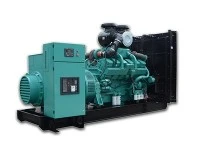
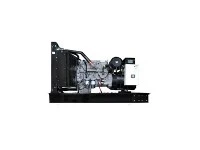
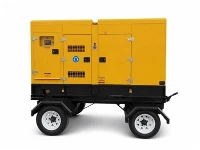
Hey there! As a supplier of construction diesel generators, I've seen firsthand how crucial it is to balance the load of multiple generators on a construction site. It's not just about keeping the lights on; it's about ensuring efficiency, reducing costs, and extending the lifespan of your equipment. In this blog post, I'll share some tips and tricks on how to achieve that perfect balance.
Why Load Balancing Matters
Before we dive into the how-to, let's talk about why load balancing is so important. When you have multiple diesel generators running on a construction site, they're all working together to power various equipment and tools. If the load isn't evenly distributed among them, some generators might be overworked while others are underutilized.


Overworking a generator can lead to a whole host of problems. It can cause excessive wear and tear on the engine, leading to more frequent breakdowns and costly repairs. It can also reduce the generator's fuel efficiency, meaning you'll end up spending more money on diesel fuel. On the other hand, underutilized generators are a waste of resources. They're still consuming fuel and taking up space, but they're not contributing as much as they could be.
By balancing the load, you can ensure that each generator is operating at an optimal level. This not only improves the overall efficiency of your power system but also saves you money in the long run.
Understanding Load Requirements
The first step in load balancing is to understand the load requirements of your construction site. You need to know exactly how much power each piece of equipment consumes and when it consumes it. This will help you determine how many generators you need and how to distribute the load among them.
Start by creating a list of all the equipment and tools that will be used on the site. This might include things like excavators, bulldozers, cranes, compressors, and lighting systems. For each item, find out its power rating, which is usually measured in kilowatts (kW). You can usually find this information in the equipment's user manual or on a label attached to the machine.
Once you have your list, you can estimate the total power demand of your site. Keep in mind that not all equipment will be running at the same time, so you might need to calculate the peak and average power requirements. This will give you a better idea of how many generators you need and what size they should be.
For example, if your site has a peak power demand of 150 kW, you might consider using a combination of a 100kW Diesel Generator Set and a 30kW Diesel Generator Set to meet the demand.
Sizing Your Generators
Once you know your load requirements, it's time to size your generators. You want to make sure that you have enough generating capacity to meet the peak power demand of your site, but you also don't want to oversize your generators. Oversized generators are less efficient and can be more expensive to operate.
As a general rule, you should aim to load your generators between 70% and 80% of their rated capacity. This will ensure that they're operating at an optimal level and will help to extend their lifespan.
For example, if your site has a peak power demand of 200 kW, you might consider using two Prime Power Diesel Generator units with a rated capacity of 125 kW each. This will give you a total generating capacity of 250 kW, which is more than enough to meet the peak demand, but also allows the generators to operate within the optimal load range.
Using Load Shedding
Load shedding is a technique that can be used to balance the load on multiple generators. It involves temporarily shutting down non-essential equipment or reducing the power consumption of certain devices when the demand for electricity exceeds the generating capacity of the generators.
For example, if you have a large compressor running on your site that requires a lot of power, you might consider shutting it down during peak demand periods and restarting it when the demand decreases. This will help to reduce the load on the generators and ensure that they can continue to operate efficiently.
Load shedding can be done manually or automatically using a load management system. A load management system can monitor the power demand of your site and automatically shed non-essential loads when necessary. This can be a great way to ensure that your generators are always operating at an optimal level.
Synchronizing Your Generators
If you're using multiple generators on your site, it's important to synchronize them. Synchronization ensures that the generators are operating at the same frequency and voltage, which allows them to share the load evenly.
Synchronization can be done manually or automatically using a synchronization controller. A synchronization controller monitors the frequency, voltage, and phase angle of each generator and adjusts them as needed to ensure that they're in sync.
Once the generators are synchronized, they can be connected to a common bus bar, which distributes the power to the various equipment and tools on the site. This allows the generators to work together as a single power source and share the load evenly.
Monitoring and Maintenance
Finally, it's important to monitor and maintain your generators regularly. This will help you to identify any potential problems early on and take corrective action before they become major issues.
You should regularly check the oil level, coolant level, and fuel level of each generator. You should also inspect the generator for any signs of wear and tear, such as leaks or loose connections. If you notice any problems, you should address them immediately to prevent further damage.
In addition to regular maintenance, you should also monitor the performance of your generators using a monitoring system. A monitoring system can track the power output, fuel consumption, and other important parameters of each generator. This will help you to identify any issues with load balancing or generator performance and take corrective action as needed.
Conclusion
Balancing the load of multiple construction diesel generators is not an easy task, but it's essential for ensuring the efficiency and reliability of your power system. By understanding your load requirements, sizing your generators correctly, using load shedding, synchronizing your generators, and monitoring and maintaining them regularly, you can achieve that perfect balance and keep your construction site running smoothly.
If you have any questions about load balancing or if you're interested in purchasing a construction diesel generator, please don't hesitate to contact us. We're here to help you find the right solution for your needs.
References
- Diesel Generator Handbook
- Construction Equipment Power Management Guide