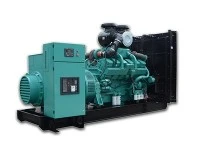
If you’ve ever wondered why a diesel genset doesn’t turn into a smoldering, overheated brick after running for hours, the radiator is the unsung hero doing all the heavy lifting. As someone who’s worked with diesel generators for years (I’m part of a small team that supplies these units for all sorts of jobs—from home backup to construction sites), I’ve seen way too many genset failures get blamed on “random engine issues” when the real problem was a neglected radiator. Let’s break down exactly what this part does, why it’s non-negotiable, and even how it ties into the different generator models we offer online.
First, let’s get the basics straight: diesel engines (the heart of any genset) run on controlled explosions of diesel fuel mixed with air. That combustion generates massive amounts of heat—like, “could boil a pot of water in 10 seconds” levels of heat. If that heat doesn’t escape, two things happen: the metal engine blocks and pistons expand so much they seize up, and critical parts like seals, gaskets, and even cylinder heads warp or crack. The radiator’s whole job is to keep that heat at a safe, consistent operating temperature (usually between 180–220°F for most diesel gensets, for those who care about the exact number). But it’s not just a passive heat exchanger—it’s a coordinated system working with other parts to keep your genset running smoothly.
Here’s how it actually works, no confusing jargon: Inside the engine, a water pump circulates a mix of water and coolant (that rust-inhibiting, anti-freeze stuff people usually only think about for car engines) through tiny passages in the engine block and cylinder head. This coolant absorbs the excess heat from the metal parts, getting hot in the process. Then it flows to the radiator, which is basically a grid of thin metal tubes with tiny fins attached—all designed to maximize surface area exposed to air. As the hot coolant moves through these tubes, a fan (either mechanical, driven by the engine, or electric) blows air across those fins, pulling the heat out of the coolant and into the surrounding air. The now-cooled coolant loops back to the engine, and the cycle repeats. Simple, right? But even small issues here—like a clogged tube, a weak fan, or low coolant—can tank your genset’s performance fast.
Now, why does this matter specifically for diesel gensets, not just car engines? Diesel engines run at much higher compression ratios than gas ones, so they generate more heat per unit of power. A 100kw Silent Diesel Generator, for example, is built to run for 8–12 hours straight (or even longer for standby use) during a blackout, at a construction site, or on a remote worksite. If its radiator is under-sized or poorly maintained, it can’t dissipate enough heat, leading to what’s called “thermal overload.” That’s when the engine’s RPM drops, it starts sputtering, and eventually shuts down to avoid permanent damage. I remember a client a few years back who rented a cheap generator for a summer construction project—no radiator maintenance, and by week three, the engine seized mid-pour of a concrete foundation. Cost him thousands in downtime, and the generator was dead. That’s the kind of mistake a good radiator design prevents.
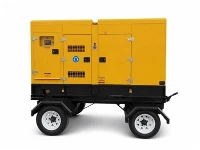
Wait, but not all gensets are the same—so their radiators aren’t either. Take our Semi Silent Generator, for example, which is designed for places where noise is a concern but you don’t need full enclosure (like small construction sites or backyard events). Its radiator is tucked partially inside a sound-dampening casing, so it’s quieter than an open-frame unit, but it still has extra fins and a slightly larger fan to compensate for less air flow. Because even with noise reduction, you can’t skip heat dissipation. Then there’s the Mobile Silent Diesel Generator—built for moving around a worksite or to temporary events. Its radiator has a more durable core, since it’s subject to vibration and being jostled on a trailer, plus it has a high-flow fan that kicks in automatically when it’s moving, so it doesn’t overheat when you’re hauling it and suddenly need to power tools at a new spot.
Even smaller units, like our 4kVA Silent Generator for home use, have to have a properly sized radiator. Home standby gensets run during peak demand, or when the power goes out for hours (or days, in bad storms). A lot of homeowners think “smaller generator = less heat, so smaller radiator is fine” but no—when a 4kVA unit is running all day to power a fridge, sump pump, and lights in 90°F weather, it’s generating just as much relative heat as a bigger unit running at a lighter load. The radiator here is optimized for quiet operation too—its fan is slower, so it doesn’t make noise, but it has a variable speed control that cranks it up if the coolant gets too hot, so it’s silent 90% of the time when it’s just running at home needs.


Speaking of home use, our Silent Generator For Home Use is designed with radiator maintenance in mind too. Unlike some budget units that have a sealed radiator you can’t check easily, our home gensets have a side access panel for the radiator, so you can flush it, check for clogs, and top off coolant in 5 minutes—no tools needed. That’s a big deal, because most genset overheating issues come from neglected radiator care. People forget to change the coolant every 2–3 years, or let dirt and leaves build up on the radiator fins, blocking air flow. A blocked radiator is like wearing a winter coat in 80°F weather—you’re going to overheat fast.
Let’s talk about common radiator problems, because even the best units can have issues. The first one is low coolant. A lot of gensets lose a little coolant over time through tiny leaks, so checking the level every month (before peak use, like hurricane season) is key. Another big one is a clogged radiator core—dirt, dust, and even small bugs can get stuck in the fins, blocking air flow. For gensets in dusty areas (like construction sites or farm fields), we recommend a radiator guard to keep big debris out, and a annual flush to get rid of built-up grime. Then there’s the fan—if the fan belt breaks or the electric fan motor fails, the radiator can’t move air, so the coolant heats up in minutes. That’s why every genset we sell (from the 4kVA to the 100kw unit) has a low-coolant alarm and an overheat shutdown feature—so the genset doesn’t just seize without warning.
Wait, another thing a lot of people don’t know: the radiator works with the genset’s thermostat to keep the engine at the perfect temperature, not just cool it down. If the engine runs too cold, it doesn’t burn fuel efficiently, and it builds up unburned diesel in the oil, which can damage parts over time. So the thermostat stays closed when the engine is cold, letting coolant circulate through the engine only, until it hits the set temperature (around 190°F), then opens to send hot coolant to the radiator. That balance is why a genset doesn’t just run cool—it runs at its peak efficiency, uses less fuel, and lasts longer. I’ve seen gensets that get regular radiator flips and coolant changes last 10+ years, while ones with neglected radiators die in 3–4. It’s that big of a difference.
So why does all this matter if you’re buying a genset? Because the radiator isn’t an afterthought—it’s a core part of the unit’s reliability, lifespan, and performance. If you’re shopping for a genset, don’t just look at the wattage or price—ask about the radiator design: is it sized for continuous run time? Can you access it for maintenance? Does it have features to prevent overheating? That’s what separates a genset that works when you need it, and one that leaves you high and dry during a power outage.
At our company, we build every genset with a heavy-duty, efficient radiator matched to the unit’s power rating and intended use. Whether you need a small unit for your home, a mobile unit for a worksite, or a large 100kw unit for a commercial building, we engineer the radiator to handle the heat, even in tough conditions. We also offer easy maintenance tips for all our models, so you can keep your genset running strong for years.
If you’re in the market for a new genset—whether for backup power, construction, events, or anything else—we’d love to help you find the right one for your needs. We can walk you through the different models, explain the radiator specs, and answer any questions you have about keeping your genset in top shape. Don’t wait until your current unit overheats and fails—reach out to us to find the perfect genset today.
References
- Internal Combustion Engine Fundamentals, J.B. Heywood, McGraw-Hill Education
- Diesel Genset Thermal Management: Best Practices, International Journal of Power and Energy Systems
- Radiator Design for Silent Generator Sets, Noise and Vibration Control Magazine