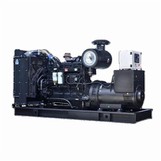
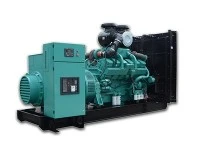
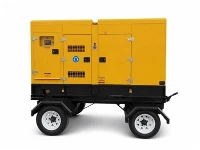
If you’ve ever worked with a high-voltage diesel genset, especially one in the 6.6kV range, you know how critical keeping frequency on lock is. I’m a supplier of these units, and I get at least a dozen questions a month from facility managers, maintenance techs, and plant operators asking, “What happens if the frequency spikes too high, and how do we stop it?” Over-frequency isn’t just a minor hiccup—it can fry your genset, damage connected equipment, and even shut down an entire operation in minutes. Today, I’m breaking down exactly how our 6.6kV diesel gensets (you can check out our full line here) guard against this issue, no overly technical jargon, just real-world stuff I’ve seen work (and fail) over the years.
First, let’s get the basics straight: 6.6kV gensets run at a synchronous speed tied directly to frequency, right? For a 6-pole genset (the most common for 6.6kV units), that speed is 1000 RPM at 50Hz, or 1200 RPM at 60Hz. The engine drives the generator, so if the engine speed jumps, frequency jumps with it. That’s the core link—frequency is just a function of engine speed for synchronous gensets. Why does over-frequency matter so much? Let’s keep it simple: every 1Hz above rated pushes voltage up too, because V/Hz is a constant for magnetic field design. Too much voltage and you’ll burn out alternator windings, blow capacitors, trash motor insulation, or even trigger circuit breakers that take the whole system offline. I once worked with a client who skipped their annual load test on a 6.6kV unit and ran it unloaded for 20 minutes—frequency spiked to 65Hz, and they had to rewind the alternator for $18k. Never again.
Now, let’s talk about the protections we build into our 6.6kV diesel gensets, and how they work in the real world. These aren’t random buttons—they’re layered systems, because one protection can fail, so you need backups.
First line of defense: The engine’s electronic governor. This is the most basic, and most important, because it’s the one that actually controls fuel delivery to adjust speed. Old gensets used mechanical governors, but all modern 6.6kV units (and stuff like the 15Kv Generator we make) use electronic governors these days. How does it work? The governor’s controller reads real-time engine speed (from a magnetic pickup or hall effect sensor) and compares it to the set frequency target. If speed creeps up, it sends a signal to the fuel injector or fuel pump actuator to cut back on fuel. Less fuel = slower engine = lower frequency. Simple, right? Wait, but what if the load drops suddenly? Like, if a big motor or factory line turns off instantly, that’s when speed spikes fast—way faster than the governor can react. That’s where the next layer comes in.


Second layer: The genset’s integrated frequency-based protection module. This is a separate controller (or a built-in feature on the genset’s main control panel) that monitors output frequency directly, not just engine speed. Even if the governor is off a little, this module picks up if frequency hits a pre-set threshold, usually 5% above rated (so 52.5Hz for 50Hz systems, 63Hz for 60Hz). When it hits that, two things happen immediately: first, it sends a hard signal to the governor to slam fuel delivery way down, and second, it triggers a warning alarm—usually a buzzer on the control panel and a text alert if you have remote monitoring set up. I’ve seen this save so many gensets where the governor had a temporary glitch. Last year, a customer of ours had a faulty load bank that dumped all its load at once; the governor took 3 seconds to adjust, but the frequency module caught it in 0.5 seconds and shut fuel down just enough to keep frequency from spiking past 62Hz. No damage, no downtime.
Wait, but what if that frequency module fails too? We don’t leave it hanging. Third layer: Over-speed shutdown, tied directly to engine RPM, not just frequency. Because at the end of the day, frequency is just RPM, so an over-speed event is the same as over-frequency. We set this trigger at 10% above rated RPM, so for our 6.6kV 50Hz units, that’s 1100 RPM, and 1320 RPM for 60Hz. When RPM hits that, we have two backup safety features: first, a fuel solenoid that cuts all fuel to the engine instantly—no more combustion, so speed drops fast. Second, an engine air intake throttle that closes almost all the way, starving the engine of air so it can’t rev anymore. I won’t lie, this is a last-resort feature—we only want it to activate if everything else fails, because slamming fuel and air off can cause stress on the engine crankshaft, but it’s way better than letting the genset blow apart. Our 2Kv Generator uses almost the same over-speed setup, just calibrated for lower voltage RPM targets.
But here’s a thing I run into with new clients all the time: people only rely on the main governor, or only the frequency module, and skip the maintenance that keeps these protections working. Let’s talk about common mistakes that cause over-frequency, even with good protections. First, unloaded or lightly loaded gensets. If you start a 6.6kV genset and don’t connect any load, the engine can rev way higher than rated, because there’s no resistance to slow it down. We always tell our clients to never run a genset without at least 30% of its rated load connected, unless it’s a tested run with a load bank. Second, faulty sensors. The speed pickup that feeds the governor, or the frequency sensor on the genset—if those get dirty or go bad, the controller thinks speed is lower than it is, so it keeps pumping more fuel. We do annual calibration checks for all our customers, and I’ve had three instances where a dirty speed pickup caused a 64Hz over-frequency spike, before we cleaned it up. Third, wrong wiring or misconfigured controllers. When installing a new genset, if the electrician sets the frequency trigger too high, or wires the fuel solenoid wrong, the protections won’t work when you need them. That’s why we send our techs to install every high-voltage unit, including our Generator 10Kv, 15Kv, and all our 6.6kV models, so we can make sure every setting is correct.
Wait, let’s address a question I get all the time: Do these protections work for parallel gensets? A lot of facilities run multiple gensets together for redundancy, and when you parallel them, frequency syncs across all units, so over-frequency can be a bigger risk. Our High Voltage Diesel Generator 6.6kV has a built-in sync controller that not only matches frequency between gensets, but also adjusts load distribution to keep frequency steady. If one unit in the parallel set starts to over-rev, the sync controller will adjust the other units to take up the extra load, or signal the over-frequency protection on the problematic unit to kick in. We had a client with three parallel 6.6kV units last year where one’s governor failed, but the sync controller picked up the frequency spike, balanced the load, and shut the bad unit down automatically—no outage, no damage. That’s the kind of design we build into every model we sell.
Now, let’s talk about when you might see over-frequency in the first place, not just a glitch. If your genset is consistently hitting over-frequency events, it’s usually a sign of a problem, not a fluke. Common issues: a worn-out fuel injector that’s delivering too much fuel, a faulty governor actuator that’s stuck open, or a leak in the fuel system that lets more fuel flow than it should. If your protection system is triggering over and over, don’t just reset the alarm and move on—get a tech to check it. Last month, a client called us panicking because their 6.6kV genset was spiking to 55Hz every time they turned on their big compressor. We came out and found the fuel pump pressure was 15% higher than rated; we adjusted it, and the spikes stopped. No need for a protection reset, just a quick fix.
Let’s circle back to the different genset models we make, because I know some of you are comparing options. If you need a lower voltage unit, our Generator 2Kv has the same tiered over-frequency protection, just scaled for its lower RPM range. For higher voltage, the 15Kv Generator uses even more advanced digital controllers that monitor frequency 10 times a second, vs. 1 time a second on older models. All our high-voltage gensets, from the 6.6kV Diesel Generator to the 10Kv unit, are tested for over-frequency events in our factory before we ship them—we run each unit at 110% speed for 10 minutes, 115% for 1 minute, and confirm every protection triggers exactly as it should. That’s how we know these systems work, not just on paper, but in real use.
Before I wrap this up, let’s hit on a big myth I hear: “Over-frequency protections are unnecessary because grid power is 50/60Hz, so when the genset is connected, it can’t spike.” Wrong. When you switch to off-grid or island mode, the genset is running the whole load alone, so a sudden load drop (like a circuit breaker tripping on a big motor) will cause frequency to spike fast, grid or no grid. Even when paralleled with the grid, if the grid connection drops, the genset goes to island mode, and that’s when over-frequency becomes a critical risk. I’ve seen a grocery store’s 6.6kV genset burn out its compressor motors because the grid dropped, and a load shift caused frequency to go to 67Hz—they had no island-mode over-frequency protection. That’s why every one of our units is pre-configured for island mode protections out of the box.
At the end of the day, protecting against over-frequency on a 6.6kV diesel genset isn’t about one single part—it’s a layered, tested system that combines engine controls, genset monitoring, and backup safety features. The key is not just building these protections into the unit, but maintaining them, calibrating them, and making sure your team knows how to use them. If you’re looking for a reliable 6.6kV Diesel Generator, or any of our high-voltage units, we can walk you through the specs, answer questions about protection systems, and help you pick the right unit for your facility. Whether you need backup power for a hospital, a data center, or a manufacturing plant, we build our gensets with over-frequency (and all) protections as a non-negotiable core feature, not an add-on. If you’re ready to chat about your needs, reach out to our team to get started.
References
- Diesel Engineering Handbook. Over-Frequency Protection for Synchronous Generators. International Association of Electrical Inspectors, 2021.
- AB High-Voltage Power Systems. 6.6kV Genset Control and Safety Standards. 2023.
- Industrial Generator Maintenance Guide. Frequency Calibration and Protection Testing. Plant Engineering Magazine, 2022.