Let’s start with one of the most common questions we get here at [our company name] as a backup power generator supplier: Can a backup power generator power a well pump? If you’ve ever relied on a private well for your home, farm, or small business—especially during a storm or grid outage—this question isn’t just hypothetical. It’s make-or-break for keeping water flowing, and skipping the right generator setup could leave you stranded with no access to clean, usable water when you need it most. Over the past years we’ve worked with residential homeowners, small-scale farmers, and even remote construction sites, we’ve seen both success stories and costly mistakes when it comes to pairing generators with well pumps. Let’s break this down from a practical, scientific angle, so you don’t have to guess.
First, let’s get clear on what a well pump actually needs. Most private well pumps are either submersible (installed deep underground in the well itself) or jet pumps (located above ground, pulling water up from the well). Both run on electricity, but their power demands aren’t one-size-fits-all. The key specs here are twofold: running wattage (the power the pump uses while it’s operating steadily) and starting wattage (the surge of power needed to kick the pump on in the first place). For example, a small residential submersible well pump might have a running wattage of 750 to 1,500 watts, but its starting wattage could jump to 2,000 to 3,000 watts—sometimes even higher for larger models. That initial surge is where a lot of people go wrong: they pick a generator that only matches the running wattage, not the starting surge, and end up with a generator that won’t turn the pump on at all.
Now, how do backup power generators factor in here? The short answer is yes, most standard backup generators can power a well pump—but only if you match the generator’s capacity to the pump’s exact power needs. This is where the specific models we offer come into play, because different well pumps require different voltage and wattage ranges. Let’s walk through the common scenarios we see with our clients. For a small residential well pump (1 to 1.5 horsepower), a generator like the Generator 2Kv is often a perfect fit. This compact, reliable unit delivers enough starting and running power for smaller submersible pumps that serve 3-4 bedroom homes, since it’s designed to handle that initial surge without overloading. We’ve had dozens of suburban homeowners tell us this unit got them through winter storms where grid power was out for 48+ hours, keeping their showers, toilets, and drinking water flowing smoothly.
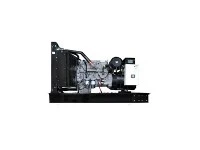
But what if you’re not a suburban homeowner? If you run a small farm, a rural property with a larger well, or even a remote off-grid cabin, your well pump is probably bigger—think 2 to 5 horsepower. These pumps have higher running and starting wattages, so you’ll need a generator with more capacity. For mid-sized farm wells, our Generator 10Kv is a go-to option. It has enough starting wattage to handle the surge of a 3-horsepower submersible pump, and its steady running capacity keeps the pump working for long periods without overheating. We worked with a 50-acre vegetable farm last year that switched from a portable gas generator to this unit; before, their old generator could only run the pump for 2 hours before cutting out, but the Generator 10Kv kept their irrigation and household water running through a 10-hour blackout after a tornado.
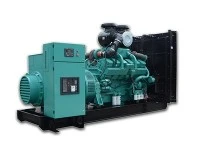
For even larger applications—like commercial well pumps that serve small communities, large agricultural operations, or industrial sites—you need a generator built for high-voltage demands. This is where our high-voltage models come in. The High Voltage Diesel Generator 6.6kV and its equivalent, the 6.6kv Diesel Genset, are engineered to handle the higher voltage requirements of commercial-grade well pumps, which often run on 6.6kV power. We installed one of these at a rural water cooperative in western Pennsylvania last year; their old setup struggled to keep up during peak demand, but the 6.6kV units power all their community well pumps reliably, even during extended grid outages. And if you need an ultra-high-capacity unit for a large industrial or municipal well system, our 30Kv Generator is designed to handle the massive power surges and steady load of pumps that serve hundreds or thousands of people.
But here’s the thing: even if you pick the right generator model, you still need to do a few key things to make sure your setup works safely and efficiently. First, always consult the well pump’s manufacturer specs. They will list exact running and starting wattage, as well as the required voltage. Don’t guess—measure it if you’re not sure. Second, never use a portable generator without a transfer switch. A transfer switch is a critical safety device that connects your generator directly to your well pump (and other home appliances) while blocking grid power, preventing backfeeding that can electrocute line workers. We always recommend hiring a licensed electrician to install the transfer switch and connect the generator, even for smaller units. It’s a small cost that avoids a huge risk.
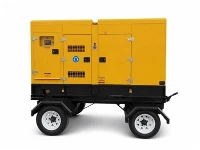
Another common question we get: can I use a portable generator instead of a standby unit to power my well pump? The answer is yes, but only if it has enough capacity. For small residential pumps, a portable generator with 3,000+ starting watts works, but standby generators (the permanently installed ones we sell) are more reliable for long outages because they automatically kick on when grid power fails, so you don’t have to run out in the dark to start it. We’ve had clients use portable generators for short outages, but for anyone who relies on their well pump as their main water source, a standby unit is worth the investment.


We’ve also seen mistakes that people make when pairing generators and well pumps, and they’re all avoidable. One client a couple years ago tried to use a generator that was only rated for running watts, not starting watts, and their well pump never turned on—they had a frozen pipe in their well head as a result, adding thousands of dollars in repairs. Another tried to run their well pump and their entire household on a small generator, which overheated and shut down mid-outage. That’s why our team always takes the time to ask specific questions: what size is your well pump? What’s your power needs? How often do you experience outages? We help clients match the right generator to their exact needs, whether that’s a small residential unit or a large high-voltage model for commercial use.
If you’re still wondering whether a backup power generator can power your well pump, let’s make this simple: if you choose a generator with enough starting and running capacity to match your well pump, and install it safely with a transfer switch, the answer is a resounding yes. The key is not just picking any generator, but picking the right one for your specific pump. We’ve worked with clients across residential, agricultural, and commercial sectors to find that perfect match, and we’ve seen firsthand how having a reliable generator for well pumps turns a stressful outage into a manageable situation.
If you’re ready to find the right generator for your well pump, our team is here to help. We don’t just sell generators—we help you assess your needs, pick the right model, and ensure it’s set up safely and correctly to keep your water flowing when it matters most. Whether you need a compact Generator 2Kv for a small home, a Generator 10Kv for a farm, or a high-voltage unit like the High Voltage Diesel Generator 6.6kV or 30Kv Generator for commercial use, we have the expertise to guide you every step of the way. Don’t wait until your next outage to be unprepared—reach out to our team today to discuss your well pump power needs and find the perfect backup generator solution for you.
References
- National Electrical Code (NEC) Article 702: Standby and Alternative Systems.
- Well Pump Power Requirements: A Guide for Residential and Commercial Applications.
- Diesel Generator Sizing Guidelines for Inductive Loads (Including Well Pumps).
- Occupational Safety and Health Administration (OSHA) Guidelines for Generator Installation and Safe Operation.