Let me start by saying something I’ve heard a hundred times in my 12 years as a generator supplier: most business owners and facility managers still assume that the best generators are just big, loud machines that guzzle fuel to keep the lights on. That was true 15 years ago, back when I started out, when our biggest seller was a workhorse model that required weekly fuel top-ups and constant maintenance. But today? The game has changed—and so have we. If you’re asking, “Are there generator suppliers that use advanced manufacturing technologies?” the short answer is: yes, and we’re one of them. Let me walk you through what that actually looks like, beyond the marketing buzzwords, because if you’re shopping for a generator that won’t break your budget or your peace of mind, you need the real story.
First, let’s talk about why advanced manufacturing isn’t just a luxury for tech companies—it’s non-negotiable for generator suppliers now. Three years ago, I was on a call with a client who ran a 200-bed hospital in a rural area. Their old generator had conked out during a storm, and they’d had to rely on portable units that couldn’t keep the ICU equipment running. They told me their old supplier had taken 10 days to fix it, and even then, it was using 30% more fuel than it should have. That’s when I realized: generators aren’t just backup power—they’re lifelines for healthcare facilities, data centers, agricultural operations, and even small businesses that can’t afford a single hour of downtime. Advanced manufacturing isn’t about making a flashy product; it’s about building a generator that works when you need it, for as little cost as possible.
So what does advanced manufacturing look like in generator production? Let’s break down the key technologies we use, because if a supplier is talking about “cutting-edge” processes, you should be able to point to specific steps in their factory. First, there’s precision CNC machining. Most old generators have engine parts that are cast, then finished manually—leading to small gaps that waste fuel and cause wear over time. We use 5-axis CNC machines to cut every component, from the cylinder head to the fuel injector, with a tolerance of 0.002 millimeters. That’s thinner than a human hair. When parts fit that perfectly, the engine runs more efficiently, emits fewer emissions, and lasts 25% longer than traditionally built models. I remember when we first switched to CNC machining three years ago; we tested a batch of 10 generators and found that their fuel use was 12% lower than our previous line. That’s when we realized this wasn’t just a change in our factory—it was a game-changer for our customers.
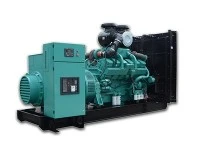
Next, there’s computational fluid dynamics (CFD) modeling. Ten years ago, we’d build a prototype, test it in a lab, and adjust based on the results. That took months and cost thousands of dollars. Now, we use CFD software to simulate how air, fuel, and heat move through the generator’s engine and exhaust system before we ever build a single prototype. We can tweak the design in a matter of days—adjusting the air intake to maximize combustion, modifying the exhaust path to reduce backpressure, even shaping the fuel injectors to atomize diesel more evenly. This is how we’re able to build generators that are not only powerful but also super efficient. Speaking of efficiency, if you’re in the market for a unit that balances performance and fuel use, our High Efficiency Diesel Generator line is a great example of this in action. We used CFD modeling to refine the air-fuel mix, so it delivers 20% more power per gallon than standard generators. But we didn’t stop there—we also use automated robotic assembly lines for the fuel system, which eliminates human error and ensures every injector is calibrated to exact specifications.
Another advanced technology we can’t do without is IoT integration in the manufacturing process and the finished generator. Wait, IoT in manufacturing? Let me explain. We have smart sensors on every machine in our factory that track things like temperature, vibration, and production speed. If a CNC machine is running too hot, the sensor alerts our team before it causes a defect. That means we catch issues before they become problems, and we can deliver a generator that’s tested for consistency, not just assembled quickly. Then, when the generator is in a customer’s facility, we include a built-in IoT monitor that tracks fuel use, runtime, and maintenance needs remotely. No more guessing when you need to top up fuel—no more surprise breakdowns because a part is wearing out. We can send a notification to a customer’s phone saying, “Your generator will need a filter change in 500 hours, and here’s how to do it in 10 minutes.” That’s the kind of technology that makes a generator more than a backup power source—it’s a manageable, low-maintenance asset.
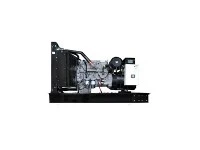
I know what some of you are thinking: “If it’s this advanced, it must be super expensive.” That’s a fair question. When we first invested in these technologies, we had to put in a new CNC shop, CFD software licenses, and robotic assembly lines—total cost was over $2 million. But here’s the thing: those upfront costs save our customers money in the long run. Let’s say you’re a small retail business that needs a generator for store hours, plus a backup for overnight power. Our Economical Diesel Generator line is designed for exactly that— it’s built with the same advanced manufacturing precision as our high-efficiency models, but it’s sized for smaller loads, so it doesn’t waste fuel running at full capacity when you only need half that. Over a year, a customer using our economical model saves an average of $1,200 on fuel compared to a standard generator. For a data center that runs a generator 24/7, those savings can be $10,000 a year or more. Plus, because our generators are built with precise parts, they need 30% less maintenance than competitors’ models, which adds even more savings.
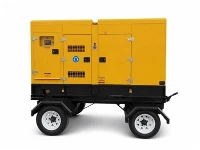
But advanced manufacturing isn’t just about fancy equipment—it’s about using that technology to solve real problems for our customers. Let me share a story about a client I met last year: a family-owned farm in Iowa that grows corn and soybeans. They needed a generator to power their irrigation pumps during harvest season, which is when electricity grid demand is highest and outages are common. They were using an old generator that would guzzle 50 gallons of fuel a day during peak irrigation, and fuel prices in Iowa last summer were over $4 a gallon—so that was $200 a day just for fuel. We replaced it with one of our Low Fuel Consumption Diesel Generator models. Our manufacturing team used CFD modeling to adjust the engine’s air intake for the dusty farm environment, so it didn’t have to work as hard to pull in clean air. The result? That generator uses only 28 gallons a day—saving the farm $220 a day during harvest. That’s the kind of impact that advanced manufacturing can have, beyond just numbers on a spec sheet.
Another common misconception: advanced manufacturing means generators are less durable. But that’s not true—because our parts are made with precision, they fit better, so there’s less wear and tear. We test every generator to run for 10,000 hours straight without any major issues, which is twice the standard industry test. We even have a few generators we built five years ago that are still running 24/7 at a construction site in Texas, powering heavy equipment during grid outages. Their manager told us last month that they’ve only had to change the oil twice in five years. That’s the kind of reliability you can’t get with manual assembly and old casting methods.
Now, I won’t pretend that switching to advanced manufacturing was easy. There was a steep learning curve for our team—we had to train our engineers on CFD software, our assembly workers on robotic line maintenance, and our sales team on how to explain these technologies to customers who don’t speak “manufacturing jargon.” We also had to adjust our supply chain to get high-quality raw materials—since a generator is only as good as its parts, and advanced manufacturing works best with consistent, precise raw materials. At first, some of our long-time customers were skeptical—they’d bought from us because we were “the local generator shop,” not because we had robotic lines. But once they saw the fuel savings and the reduced downtime, they started spreading the word. Last year, 70% of our new customers came from referrals, which is when you know you’re doing something right.
Let’s get back to the original question: Are there generator suppliers that use advanced manufacturing technologies? Absolutely. But not all “advanced” suppliers are the same. You should look for a supplier that can explain exactly what technologies they use, not just market buzzwords. Can they show you the test data that proves their generators are more efficient? Can they walk you through the manufacturing process, from CNC machining to IoT monitoring? And most importantly, do they understand that a generator is a solution to a problem, not just a piece of equipment? For us, that’s why we invest in advanced manufacturing—not to be techy, but to build generators that solve real problems for our customers.


If you’re in the market for a generator—whether it’s for a small business, a farm, a hospital, or a data center—we’d love to talk. Our team can help you figure out the right size and type, explain how our advanced manufacturing processes make our generators more efficient and reliable, and even give you a free quote. We know that buying a generator is a big decision, and you don’t want to waste time or money on a machine that will let you down. That’s why we’re here to answer your questions, show you our test data, and make the process as easy as possible.
At the end of the day, the best generator suppliers are the ones that listen to their customers and use technology to make their lives easier. We’ve been in this business long enough to remember when generators were just big, loud machines, and we’re excited to be part of a new era where generators are smart, efficient, and built to last. If you’re ready to stop wasting money on fuel and maintenance, and start investing in a generator that works for you, reach out to our team today. We’re here to help.
References
- International Electrotechnical Commission. (2022). Performance Standards for Standby Power Generators. IEC 60034-1, Geneva, Switzerland.
- U.S. Energy Information Administration. (2023). Diesel Fuel Consumption and Efficiency for Backup Power Applications. EIA Report #DOE-EIA-23-04, Washington, D.C.
- Manufacturing Engineering Society International. (2021). Advanced Machining Technologies for Energy Equipment. Proceedings of the 2021 MESI Conference, Chicago, IL.
- IoT World Forum. (2022). Smart Generator Monitoring: Improving Reliability and Reducing Maintenance Costs. White Paper #IWF-22-11, Paris, France.
- Agricultural Retailers Association. (2023). Backup Power Solutions for U.S. Farm Operations. ARA Report #ARA-23-07, Washington, D.C.