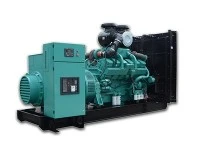
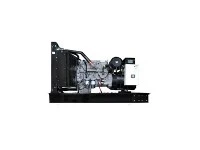
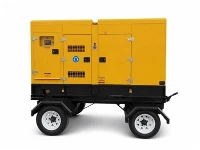
If you’ve ever shopped for high-voltage power backup, you’ve probably run across 6.6kV diesel gensets and wondered about a basic, make-or-break spec: their rotating speed. I get it—when you’re tasked with picking a backup power system for a hospital, data center, or large industrial plant, the rotating speed isn’t just a random number scribbled on a spec sheet. It directly ties to how well your genset performs, how much fuel it uses, and how long it’ll last. As a supplier who works with these units day in and day out, I’ve fielded this question from electricians, maintenance managers, and plant operators a hundred times. Let’s break it down in plain English, no confusing jargon, and explain why speed matters, what the right speed is for a 6.6kV genset, and how that fits into the bigger picture of high-voltage power.
First, let’s start with the basics of how a diesel genset works for anyone who’s not a power engineer. A diesel engine burns fuel to spin a shaft, and that shaft is connected to an alternator (the part that makes electricity). The alternator needs to spin at a specific speed to produce the voltage and frequency your site relies on. For most places around the world, that’s 50Hz or 60Hz—two global power standards. Most of the time, 6.6kV gensets are built for either, but speed shifts depending on which frequency they’re designed for. That’s not a 6.6kV-specific quirk, either; it applies to all high-voltage units, from 11kV Diesel Generator to 30Kv Generator, and even the broader category of High Voltage Diesel Generator.
Now, the direct answer to “what’s the rotating speed of a 6.6kV diesel genset?” It’s almost always either 1,500 RPM or 1,800 RPM. Wait, that seems like a huge gap—why two numbers? Let’s tie that back to frequency, which is the cycle of electricity that powers your tools, lights, and machinery. In regions that use 50Hz (most of Europe, Africa, Asia, and parts of South America), the rule for alternator speed is simple: Speed = (Frequency × 120) / Number of poles. Most industrial alternators have 4 poles (the number of magnetic sections inside the alternator), so plugging in 50Hz gives (50 × 120) / 4 = 1,500 RPM. That’s your go-to speed for 50Hz 6.6kV units. For regions using 60Hz (the U.S., Canada, parts of Central and South America), swap in 60Hz: (60 × 120) / 4 = 1,800 RPM. That’s why you see those two speeds pop up nonstop for 6.6kV gensets, no matter the application.
I’ve seen a lot of new buyers get tripped up here: 6.6kV is the output voltage, right? So why does speed not change with voltage? That’s a great question, and it’s a common mix-up. Voltage and rotating speed are separate specs, though they do work together. The alternator’s voltage is determined by how strong its magnets are, how many turns of wire are in the stator, and how fast it spins. For a given voltage, if you spin it faster, you can use fewer turns of wire, which cuts down on size a bit—but 6.6kV is a mid-range high voltage, so it uses standard pole counts that align with the global 1,500/1,800 RPM baseline. If you bump up voltage to 11kV or 15kV, you’d still stick to that same RPM for 50/60Hz; you’d just adjust the alternator’s winding to hit the higher voltage instead of changing speed. That’s why 11kV Diesel Generator and 15Kv Generator typically run at those same two speeds, too—speed is all about frequency, not voltage level.
Now, why does this speed matter more for a 6.6kV genset than, say, a small home backup unit? Most small home gensets are 120/240V and spin at 3,600 RPM (for 60Hz) or 3,000 RPM (for 50Hz) to get their lower voltage. Those speeds are fine for small loads, but when you’re dealing with 6.6kV power that runs industrial motors, hospital MRI machines, or data center cooling systems, consistency is key. Spin too fast, and you’ll burn out the alternator from excess heat; spin too slow, and the frequency drops, causing machinery to glitch or shut down entirely. A manufacturing plant I worked with a couple years back tried cutting corners by buying a cheap 6.6kV genset that ran at an off-speed, and within a year, they had to replace three of their expensive production motors—costing them 10x what they saved on the cheap unit. That’s why sticking to the standard 1,500 or 1,800 RPM is non-negotiable for these high-voltage units.
Let’s also talk about other factors that can tweak speed, though they’re rare for standard 6.6kV gensets. Some specialized units for remote mines or island grids might have variable speed controls to save fuel when loads are low, but that’s a custom setup, not the off-the-shelf unit we supply. For 99% of commercial, industrial, and infrastructure projects, you’ll be looking at fixed-speed gensets, which stick to 1,500 or 1,800 RPM depending on your region. That’s why when you look at our 6.6kV Electric Power Generator page, you’ll see both speed options listed front and center—we make it easy for customers to match to their local grid without digging through spec sheets.
Another common question: Do bigger engines spin slower? For 6.6kV gensets, it’s not about engine size, it’s about alternator design. A 1 MW 6.6kV genset and a 5 MW 6.6kV genset will both run at 1,500 RPM for 50Hz, even if their engines are way different sizes. The alternator is built to maintain that speed consistently, often with a governor that adjusts fuel delivery in real time to keep RPM steady, even if you switch from 20% load to 100% load. That governor is what keeps you from getting that frequency drop I mentioned earlier—no governor, and your 6.6kV genset is just a fancy paperweight.
I should also clarify how this compares to other high-voltage gensets to give you context. If you need a higher output voltage, like a 30Kv Generator, it’ll still run at 1,500/1,800 RPM too—same frequency rule applies. Even for 15Kv Generator units, the speed doesn’t change; only the alternator’s winding adjusts to handle the higher voltage. The only time speed shifts is when you go to a different frequency, not a different voltage. That’s a simple rule that holds true across nearly all industrial high-voltage diesel gensets.
Now, let’s talk about real-world use cases where this speed matters most. Take a coastal power plant in the Middle East that runs 50Hz: their 6.6kV gensets spin at 1,500 RPM to power water desalination pumps. If the speed dipped even 10 RPM, the pumps would stop, and the city’s water supply would be at risk. On the flip side, a data center in Texas (60Hz) has 6.6kV gensets at 1,800 RPM to keep server farms running during grid outages. The server equipment is designed to handle small voltage fluctuations, but if frequency drops because the genset is spinning too slow, you’re looking at millions in lost revenue from downtime. That’s why picking the right speed for your region isn’t just a technical detail—it’s a business decision.
I often get asked if you can modify a 6.6kV genset’s speed to work in a different region. Technically, you can change the alternator’s pole count, but that’s not something I’d recommend. Modifying the poles would require rewinding the alternator, which is expensive, time-consuming, and can void the unit’s warranty. It’s almost always better to buy a genset built for your local frequency and corresponding speed—whether that’s 1,500 RPM or 1,800 RPM. Our team here has helped dozens of customers avoid that mistake, by asking upfront about their grid frequency and making sure they get the right unit from the start.
Now, if you’re in the market for a 6.6kV diesel genset, you’re probably working on a project that needs reliable, high-capacity power—so you’re not just buying a random unit off the shelf. You want something that’s built to last, meets industry standards, and has a speed that matches your site’s needs. Whether you need a unit for a new factory expansion, a hospital’s backup power, or a remote mining site, the key spec for speed is straightforward: 1,500 RPM for 50Hz regions, 1,800 RPM for 60Hz regions. If you’re still not sure which you need, or you have questions about how speed ties to your specific load, our team is here to walk you through it. We’ve worked with all kinds of projects, from small industrial sites to large-scale infrastructure, and we can help you pick the right High Voltage Diesel Generator that fits your needs, budget, and timeline.
Don’t waste time guessing or cutting corners when it comes to power backup. The rotating speed of your 6.6kV diesel genset might seem like a small detail, but it’s the backbone of how well your unit performs. Get that right, and you’ll have a reliable power source that runs for years without issues. If you’re ready to talk specs, pricing, or delivery for your project, reach out to our team to start the conversation—we’re happy to help.


References
- Electrical Contractor's Guide to High-Voltage Diesel Generators, National Association of Electrical Distributors, 2023
- Industrial Rotating Machinery Fundamentals, IEEE Press, 2022
- Frequency and Rotational Speed Standards for Power Generation, International Electrotechnical Commission (IEC) Publication 60034-1, 2021
- Load Capacity and Efficiency of 6.6kV Diesel Gensets, Industrial Power Systems Design Magazine, Q2 2024